How do we mourn while growing futures? In the midst of a polycrisis, what can art and culture offer? How can we redirect our creativity towards building care-informed infrastructures?
Learning to Grow, Learning to Grieve is an ongoing artistic research project exploring how regenerative growing practices—such as agroecological, regenerative, and natural farming, which support soil health, biodiversity, and healthy food systems—can intertwine with grief-informed approaches. These approaches help us consciously engage with death, decay, and the naming and witnessing of environmental and systemic loss. Through situated, relational interventions in growing spaces and landscapes, I bring these practices into dialogue.
Grief work, in particular, can build our capacity to sit with complexity and discomfort, face uncertain futures and harmful pasts, and hospice a dying system wrought by modernity. Rather than seeking to fix or resolve, this work creates space for cultivating cultural practices rooted in connection rather than separation.
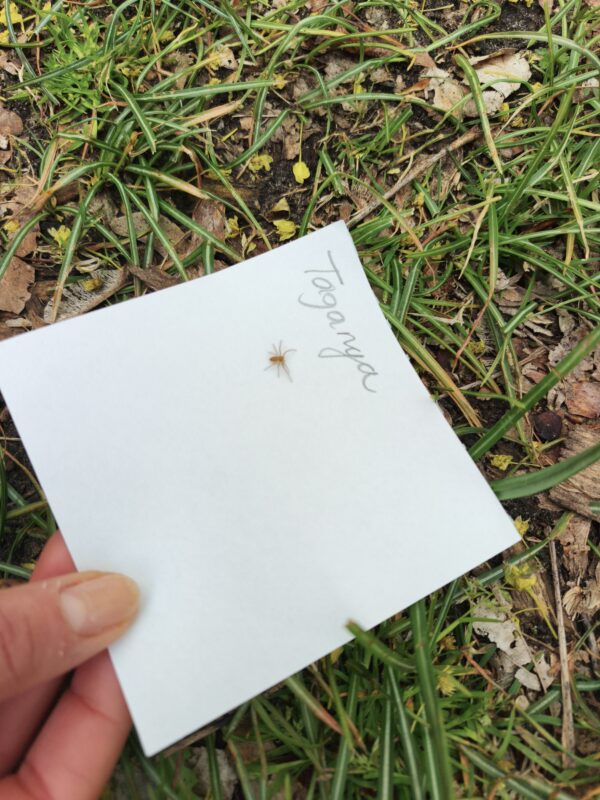
To explore the relationship between growing and grief-informed practices, I am developing soft scores: flexible invitations to name and witness ecological and systemic grief and loss, from the disappearance of species and the degradation of landscapes to the erosion of relationships with the more-than-human and the loss of possible futures. These scores cultivate the capacity to listen and respond with care, making space for a spectrum of emotional responses and the complexity of our relationships with a world in transformation. Valuing circular time as an alternative to linear, progress-oriented thinking, they move beyond the imperatives of fixing, certainty, and perfectionism, opening up possibilities for sensing, inhabiting, and relating to place differently, and for cultivating a collective imagination of possible futures.
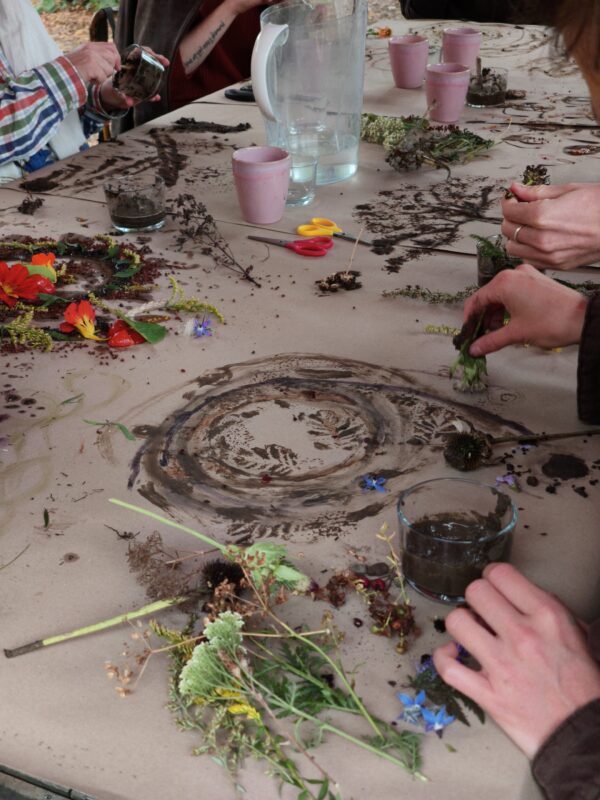
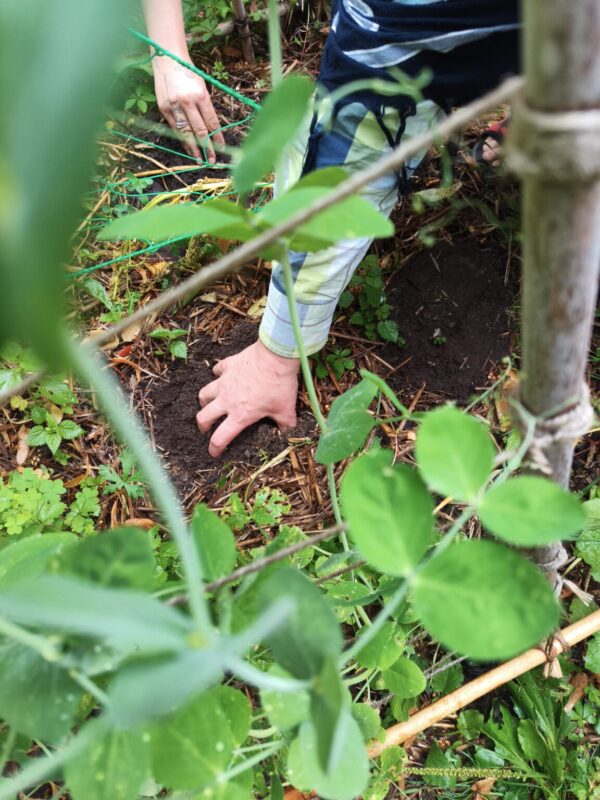
Each score comprises a series of guided actions or instructions that invite creative, emotional, somatic, relational, and collective engagement over a flexible timeline. The scores unfold in response to the rhythms of those present and to what emerges between them, including the more-than-human. Working with what is at hand, they draw on locally sourced materials and the particular conditions of each place, encouraging participants to attend to what is present and growing, ready for harvest or in need of support, decaying or dying away.
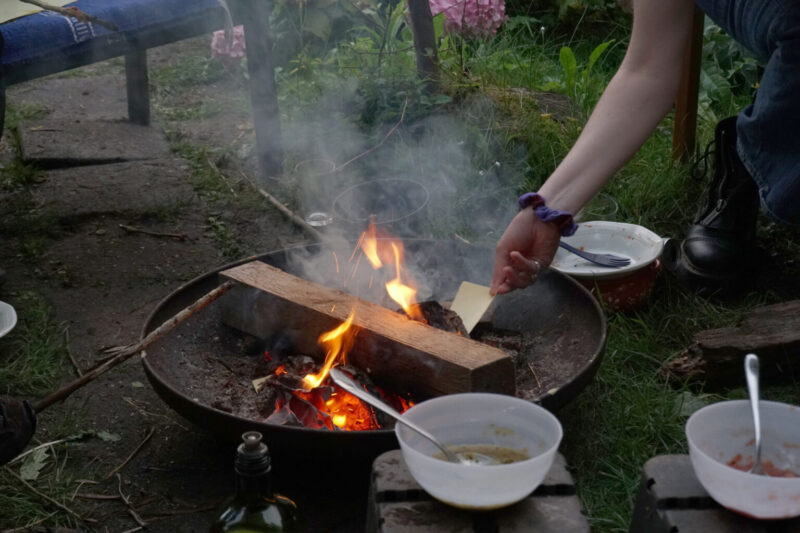
These invitations take shape through artistic and cultural experimentation: transforming materials, incorporating so-called waste, harvesting and cooking, preparing recipes for people and soil, co-regulating in response to the daily news, engaging in guided meditations and circle shares, mourning collectively, walking, reading, drawing, and journaling. Through these situated practices, the scores bring together embodied experience, material transformations, and shared reflection, engaging the collective imagination through action.
The research and its emerging practices began in a small allotment garden in Rotterdam South and have since expanded to other sites, including Spore Initiative in Berlin and Longva AIR in Norway, which have hosted research activities and participatory events, as well as to collaborations with Social Practice Library in Rotterdam and Social Design at HFBK Hamburg.
Across these different contexts, I have cultivated a working ethos informed by fermentation expert Sandor Katz’s understanding of culture as both the cultivation of ideas, customs, and social behaviours and the cultivation of bacteria and plants. This understanding of culture as a practice of cultivation underpins the research and connects social and ecological processes. It also informed the development of Learning Grounds, an informal network in Rotterdam bringing together artists, cultural workers, researchers, and gardeners. Through hands-on activities in green spaces, the network explores alternatives to infrastructures of separation. Through situated, potentially scalable acts of cultivation, we can experiment with new ways of living and relating, reconsider what culture means, and reimagine its role in growing futures.
Part of this practice is based on a genealogy of ongoing training, mentorship and other experiences in collective resonance in grief work (Tobi Ayé), embodied activism (rae johnson), contemplative end-of-life care (Institute of Traditional Medicine), Active Hope (Joanna Macy), hospicing modernity (Vanessa Machado de Oliveira), depth education and decolonial futures (Gesturing Towards Decolonial Futures), among others.
See also:
Mapping Growing and Grieving
Learning Grounds
https://www.instagram.com/learn_inggrounds/
https://www.transformativepedagogy.net