Return to home page
Location: Spore Initiative regenerative garden @ Spore Initiative, Berlin
Date: September 13th – October 17th, 2026
Duration: One month
Phases: Collection. Preservation. Culturing. Multiplication. Release.
One belongs to the earth and the sky, but not individually or in isolation, not ambiguously, not once and for all, but with others, and in others, in a gradual, hesitant way, with the ever-present risk of stumbling. One belongs in the manner of a person who—merely for having a body, for being made of a common material—responds to a requirement or an invitation from this planet, this solar system, this universe. Belonging is being among other things; accepting that state. Giving oneself up to it. Belonging is inhabiting.
—Cristina Rivera Garza, Autobiography of Cotton
Ingredients: forest soil, bran, rice, raw sugar, two mother trees, one young tree, microbes in shades of white, grey, pink, orange and green, a scale, a compost thermometer, memories of the sea, preparations from the soft scores Awaken and Emerge and Ferment Collective Resilience, dawning and descent, burials and unearthings, awakenings and slumber, a bed of leaves, rainwater, apocalyptic heat, rising temperatures, cooling temperatures, cycles of sun and rain, golden autumnal light, an autobiography of cotton, belonging, environmental warfare and ecocide, brown sheets of paper, soil, dried husks, berries, collective imaginations of futures, a gathering of human and nonhuman bodies.
* The soft score “cultivating (micro)communities” acknowledges the practices and writings of Joanna Macy’s deep time ecology, Suzanne Simard’s finding mother trees, Vanessa Machado de Oliveira’s whole-shebang relationality, and Cristina Rivera Garza’s belonging as inhabiting.
Soft Score
COLLECTION
10:00
Welcome. Checking in with the Land.
Take a walk around the garden.
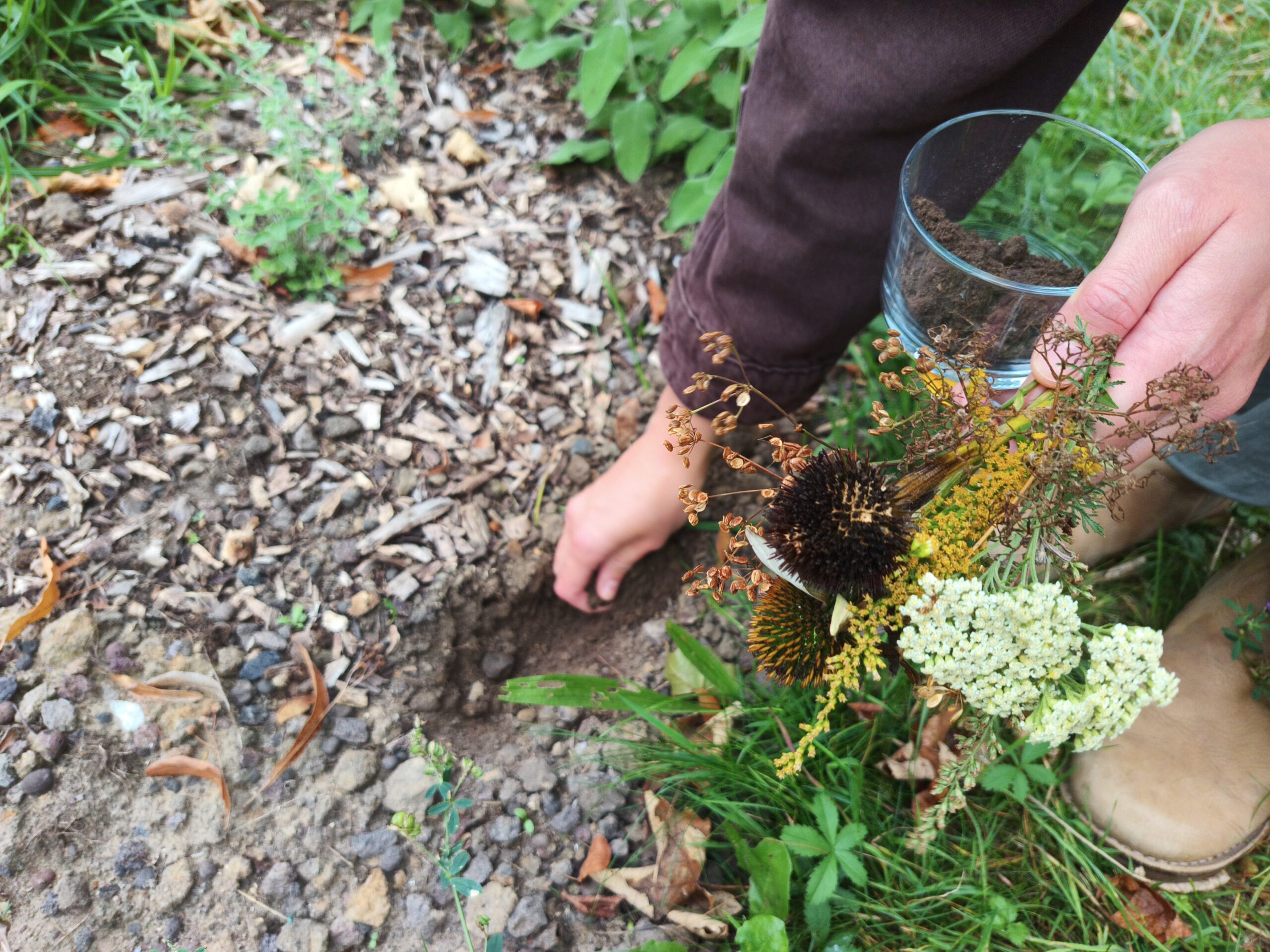
Gather soil, gather plants that connect to your relation to the Land.
Ask permission to whatever calls you before taking.
10:15
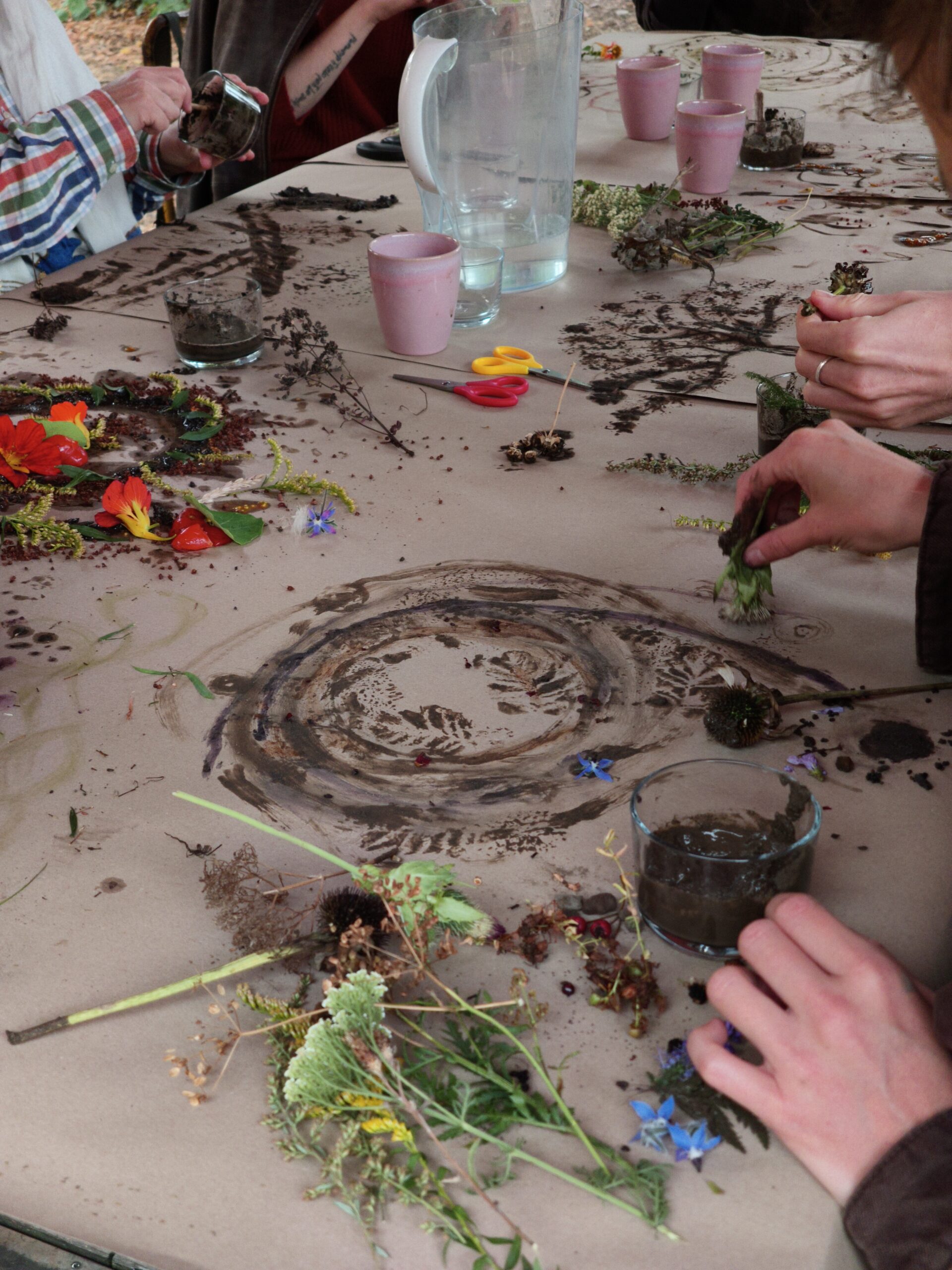
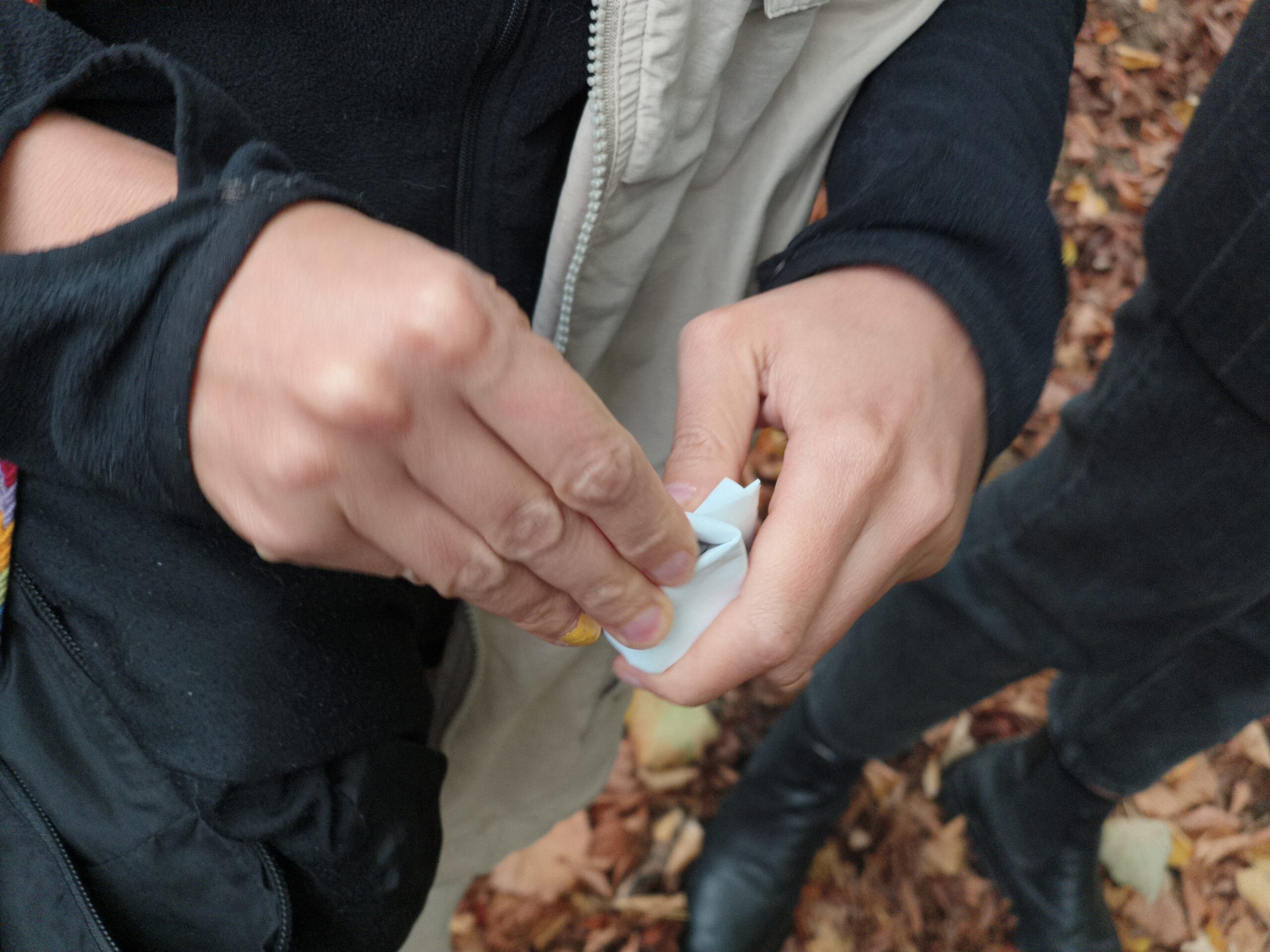
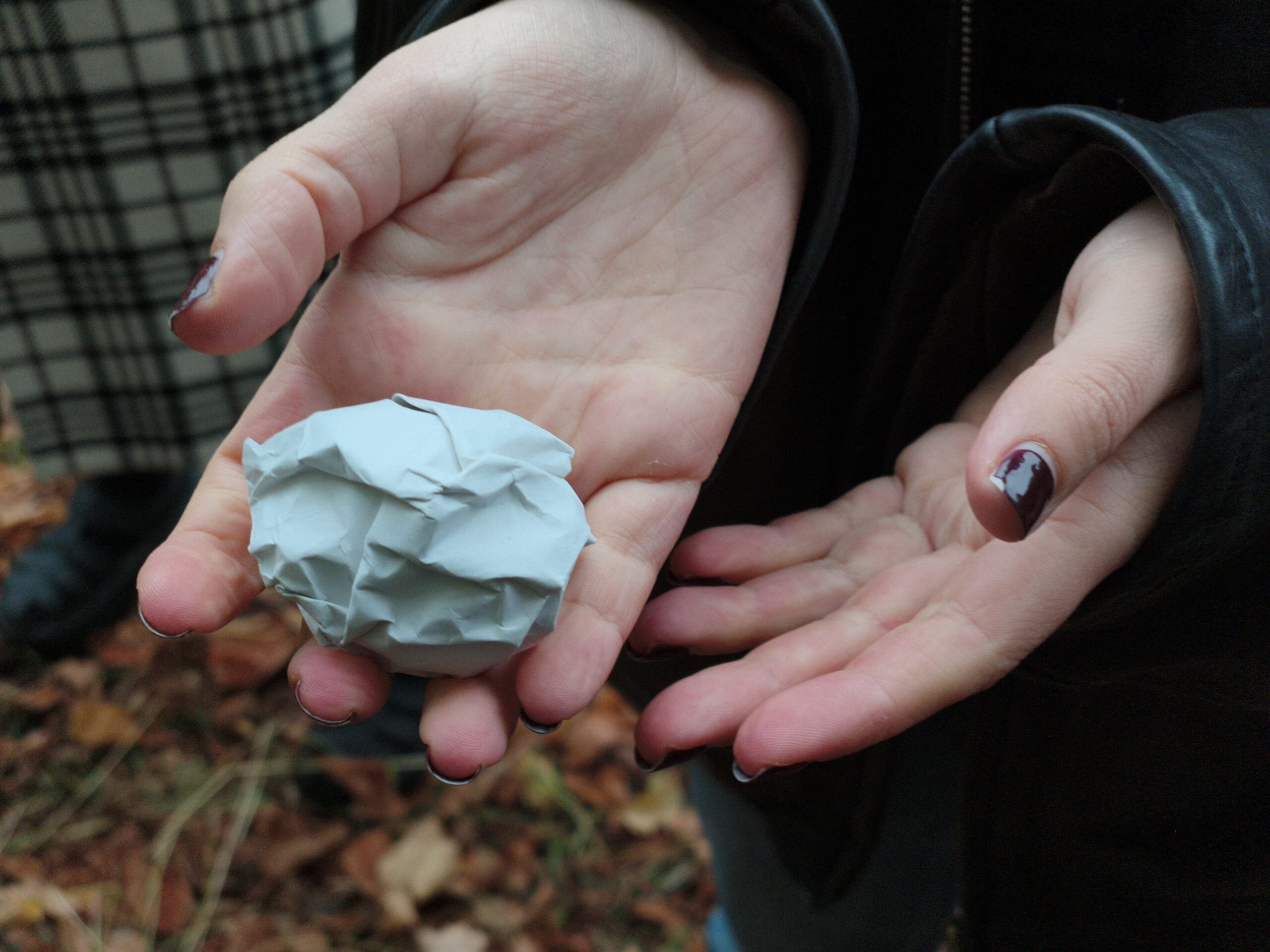
Place the soil and plants gathered around the garden on a table covered with three sheets of brown paper.
A round of introductions.
To those present, to the human and more-than-human teachers, past and present.
To the trees and their (micro)communities.
To the tree elders. To the mother trees.*
10:45
Grounding.
What is present? Listen to the rhythms. Smell the smells.
Feel the sensations on your skin.
Sense into the trees that accompany, feed, and shelter us.
The trees that bear witness to the consequences of colonial policies.
Imagine roots are extending from your feet, extending deep into the ground.
Feel the support, feel the connection.
With your breath, try to mirror the rhythm of a tree in the garden.
11:00
When I imagine the world we will leave those who come after us, it looks like…*
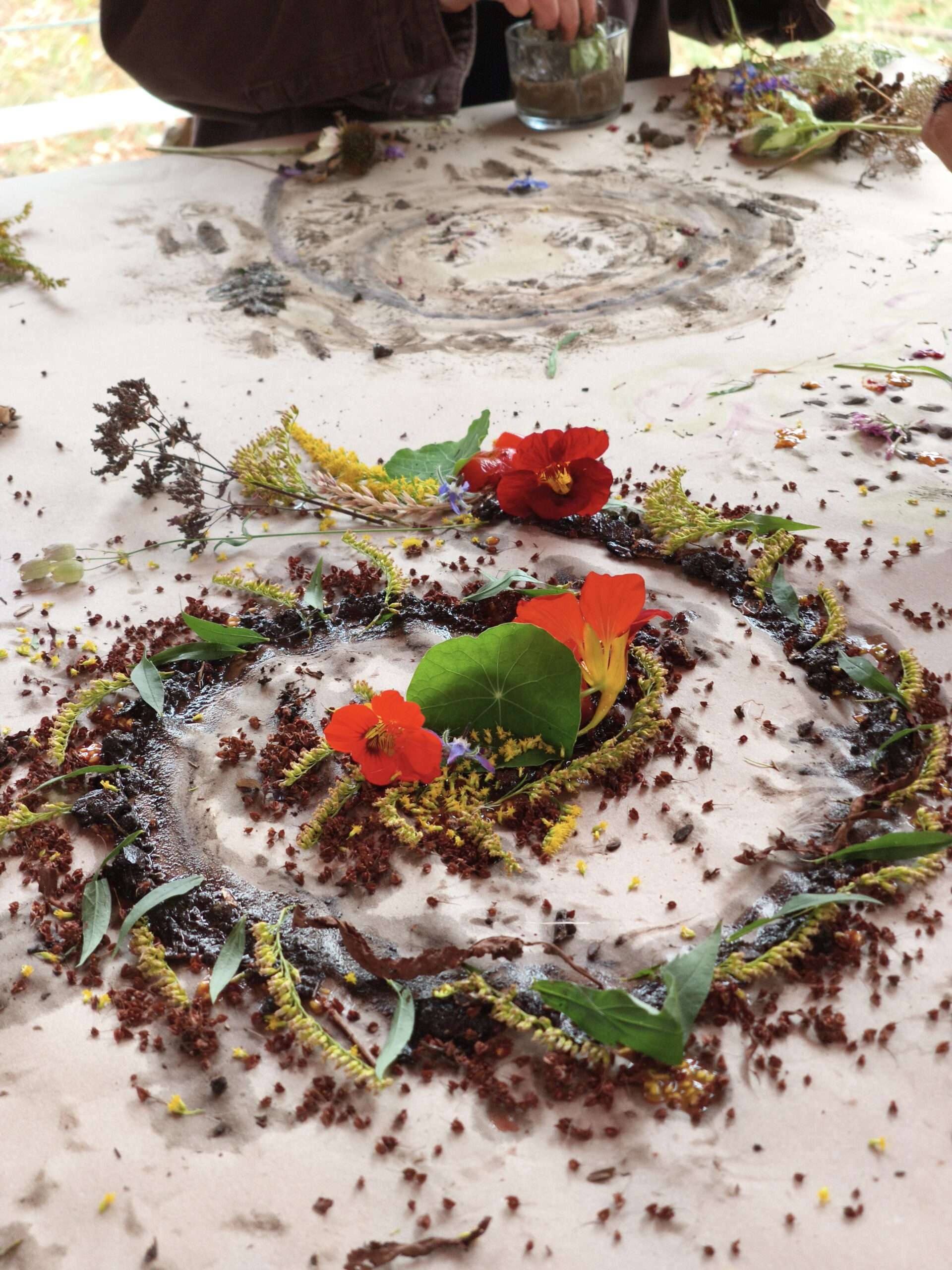
An invitation to paint, write, draw to an open question using the soil and plants on the table.
Paint, write, and draw in silence for 20 minutes.
[Tea is prepared using lemon balm, yarrow, and artemisia vulgaris. A wooden box filled with half-cooked rice is cooling and ready for the next step.]
11:20
Serve tea. Circle share.
What came up for you as you were painting, writing and drawing?
What is the world that you are leaving behind?
11:50
Gratitude for all that has been shared.
Honoring grief, hopelessness, despair, solidarity, love and joy.
12:00
Burial.
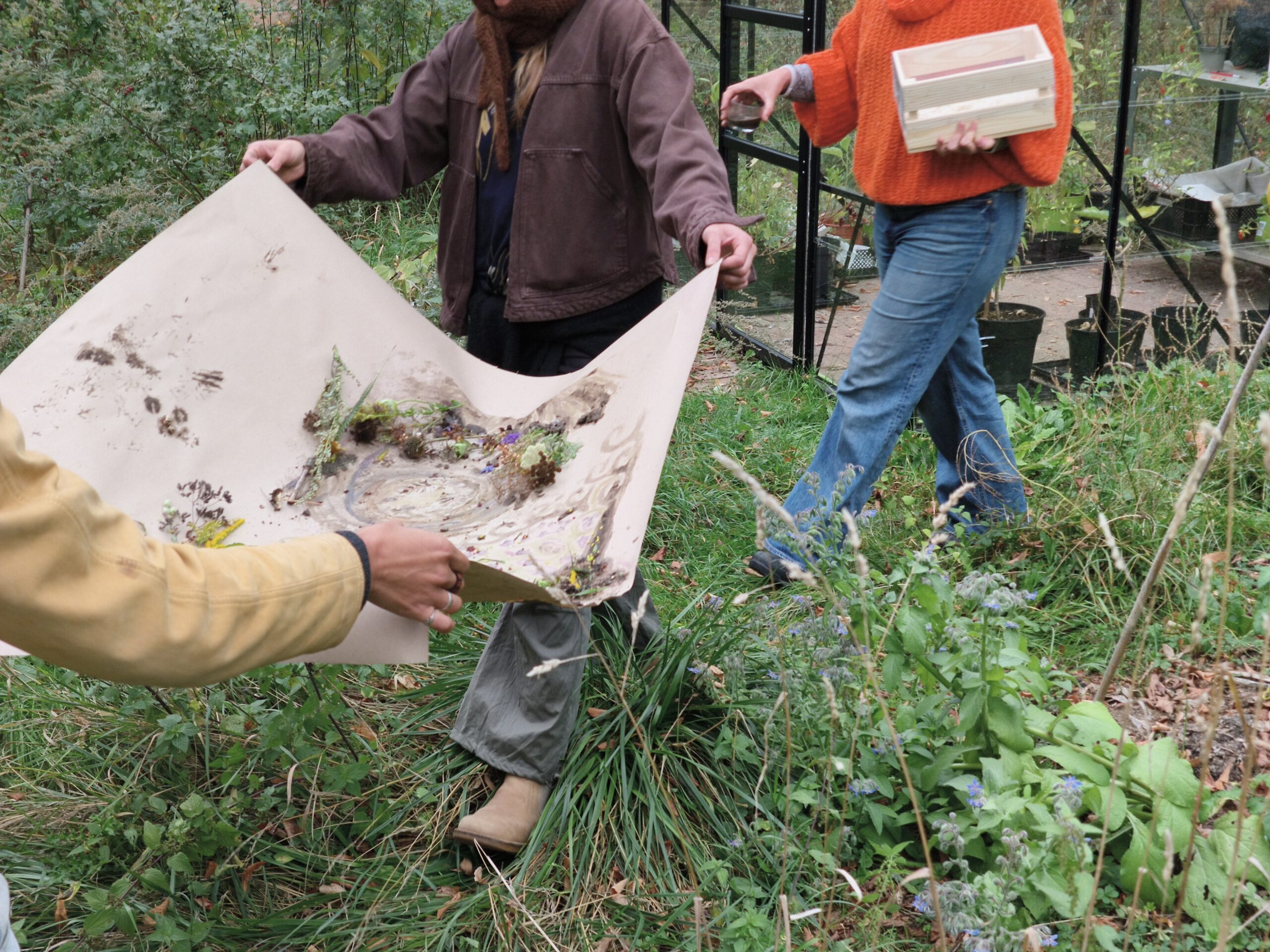
Separate into three groups, divide the collective painting across three sheets.
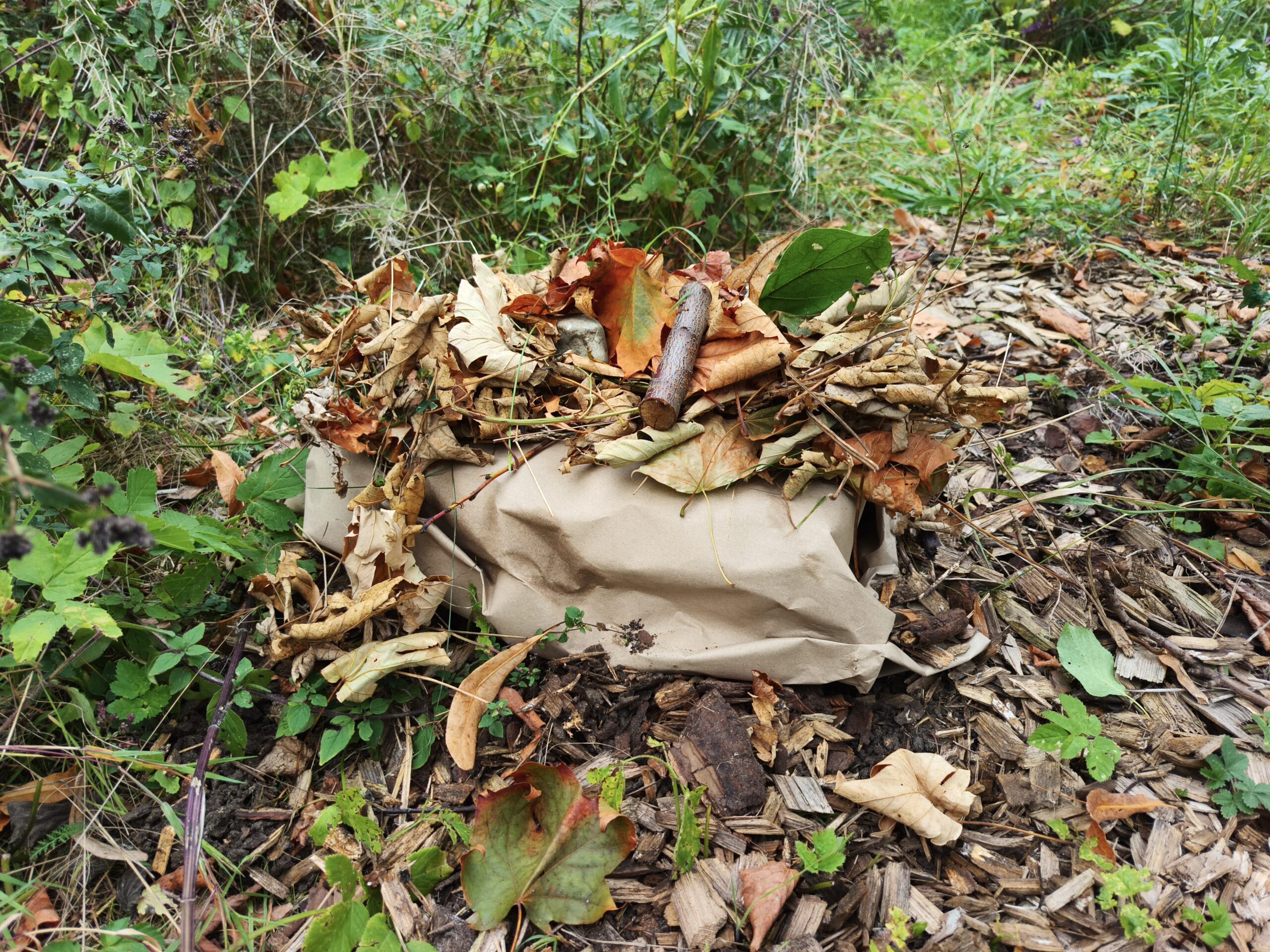
Bury a box of cooled rice beneath each of the three trees in the garden.
The apricot tree, the young tree.
The maple tree, one of the mother trees.
The linden tree, the other mother tree.
Place the collective painting over the buried box of rice.
Add a pile of dry leaves and other dead matter.
Leave the box of rice, soil-plant painting, and dead matter to rest.
[The rice buried beneath the trees will cultivate indigenous microorganisms, including decomposer fungi, mycorrhizal fungi, and beneficial bacteria, for use in the next phase of the soft score.]
12:20
Reflections and reverberations.
A shared meal of fresh spring rolls using rice paper, herbs and flowers harvested from the garden.
13:00
End of phase 1. Collection.
[wait 3-5 days]
PRESERVATION
[Four days later]
13:00
Checking in. Grounding.
An invitation to place your intention to what you want to grow and flourish.
Feeling and sensing into what is supporting you today.
To believe in life. Life is there. Life that is alive, and constantly changing.
Cultivating (micro)communities.
13:15
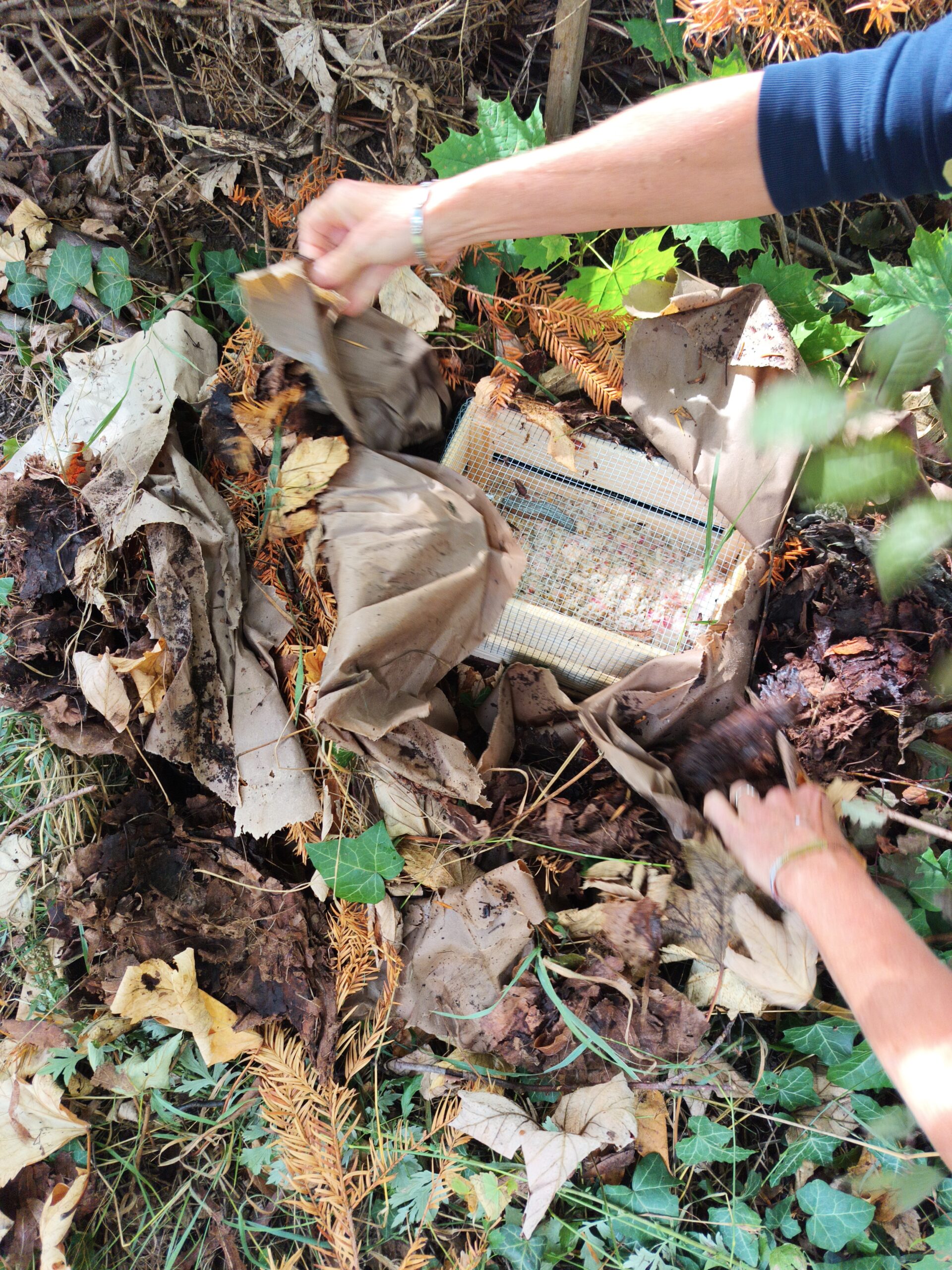
Unearthing.
Unearth the rice boxes buried under the three trees.
Under the young tree, the apricot tree.
Under the two mother trees, the maple tree, the linden tree.
13:20
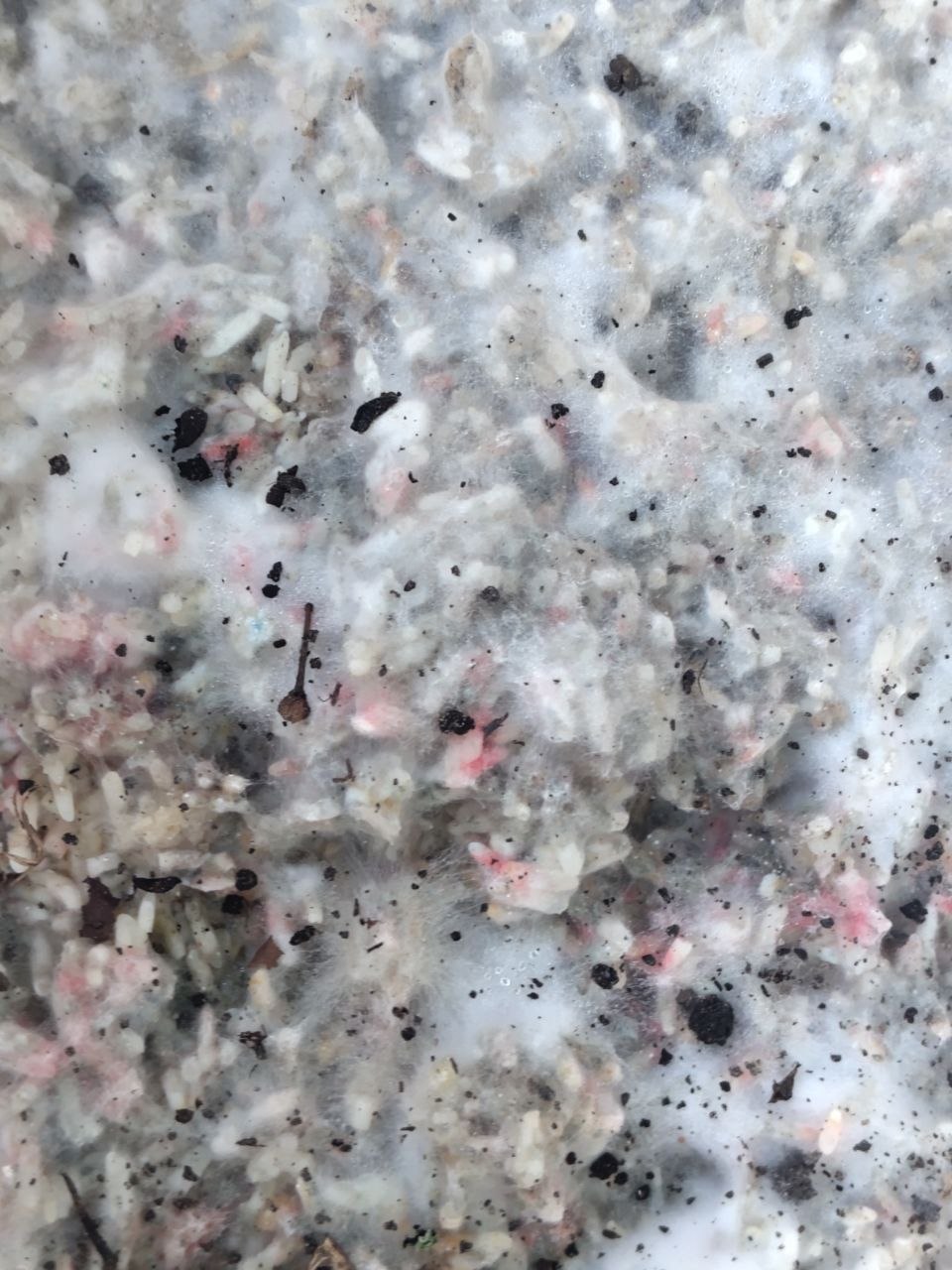
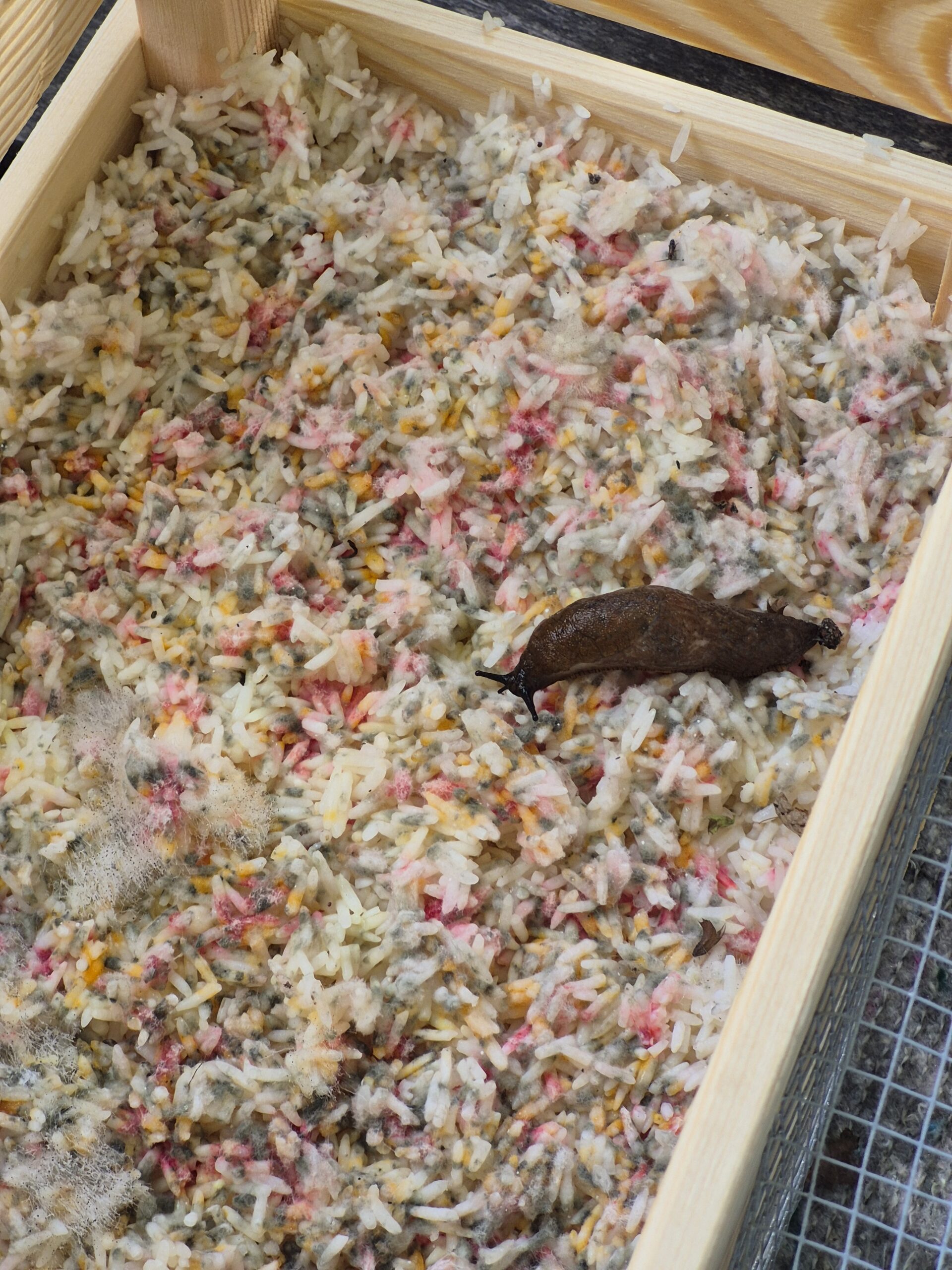
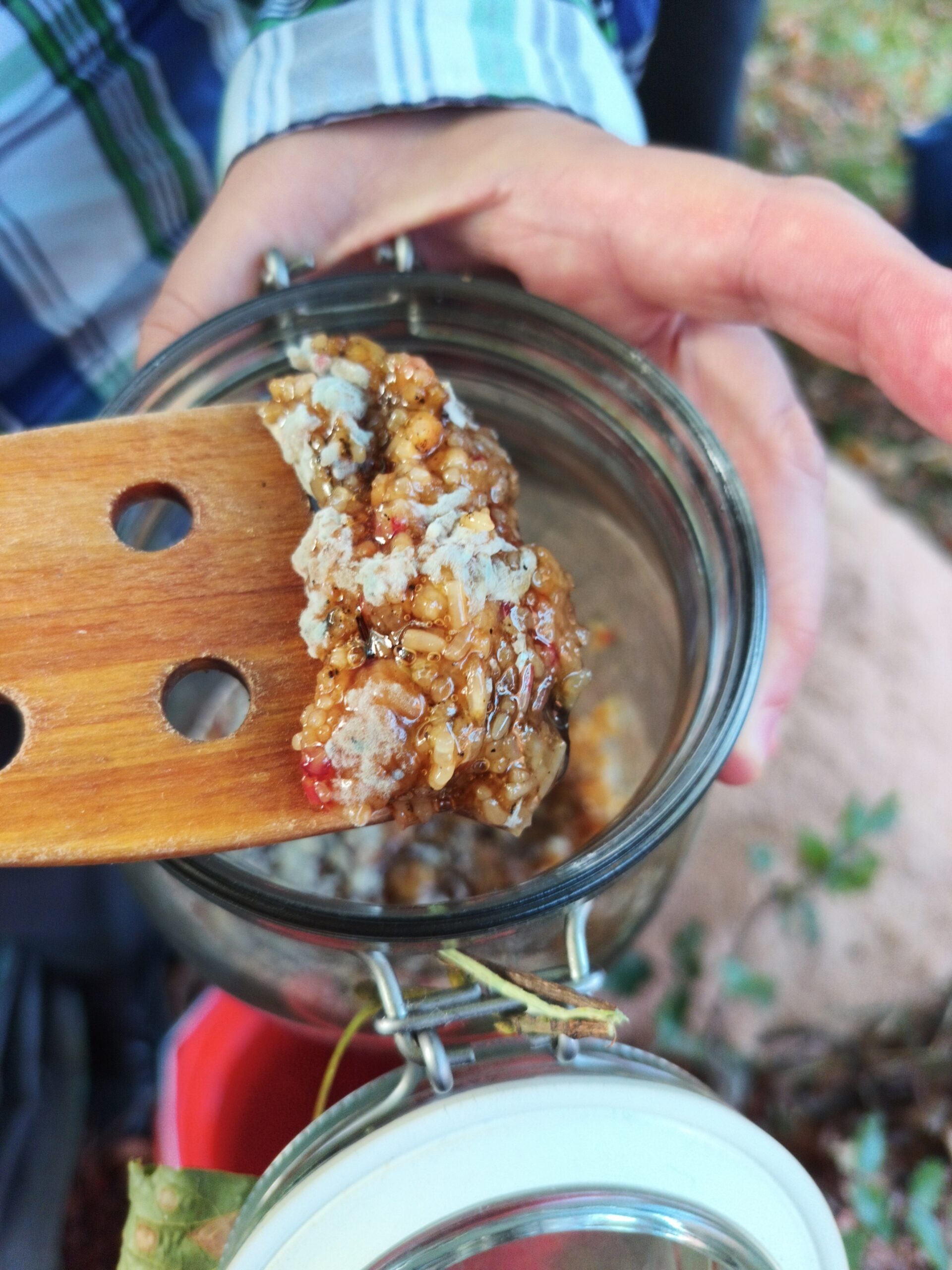
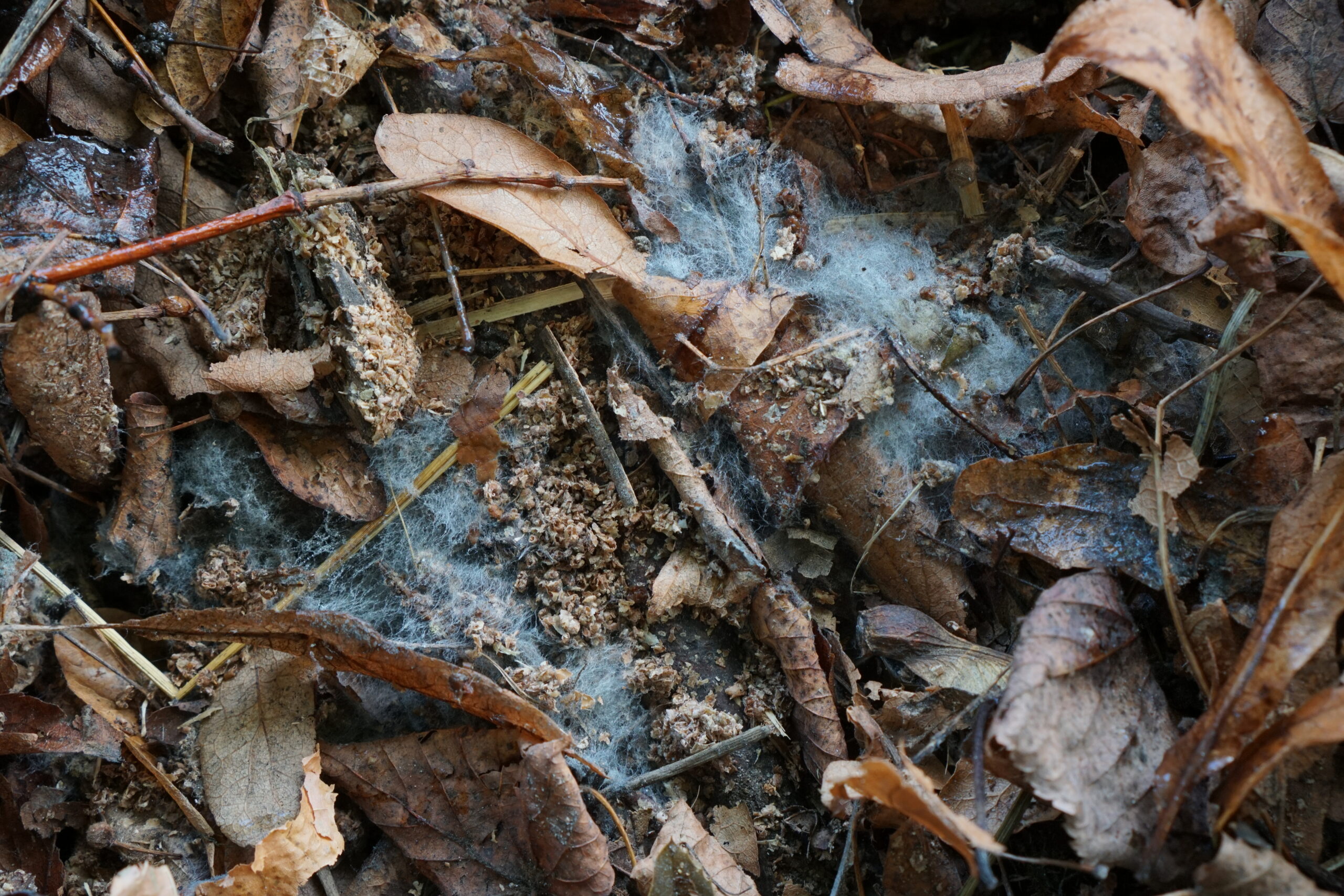
What is growing on the rice buried beneath the tree?
Observe the colours and textures emerging from the rice, white, grey, pink, orange and green, inhale the aromas from the meeting of rice, tree and soil.
13:45
Weigh the rice.
Weigh an equal amount of raw sugar.
Mix the rice and sugar.
Place the mixture in a jar.
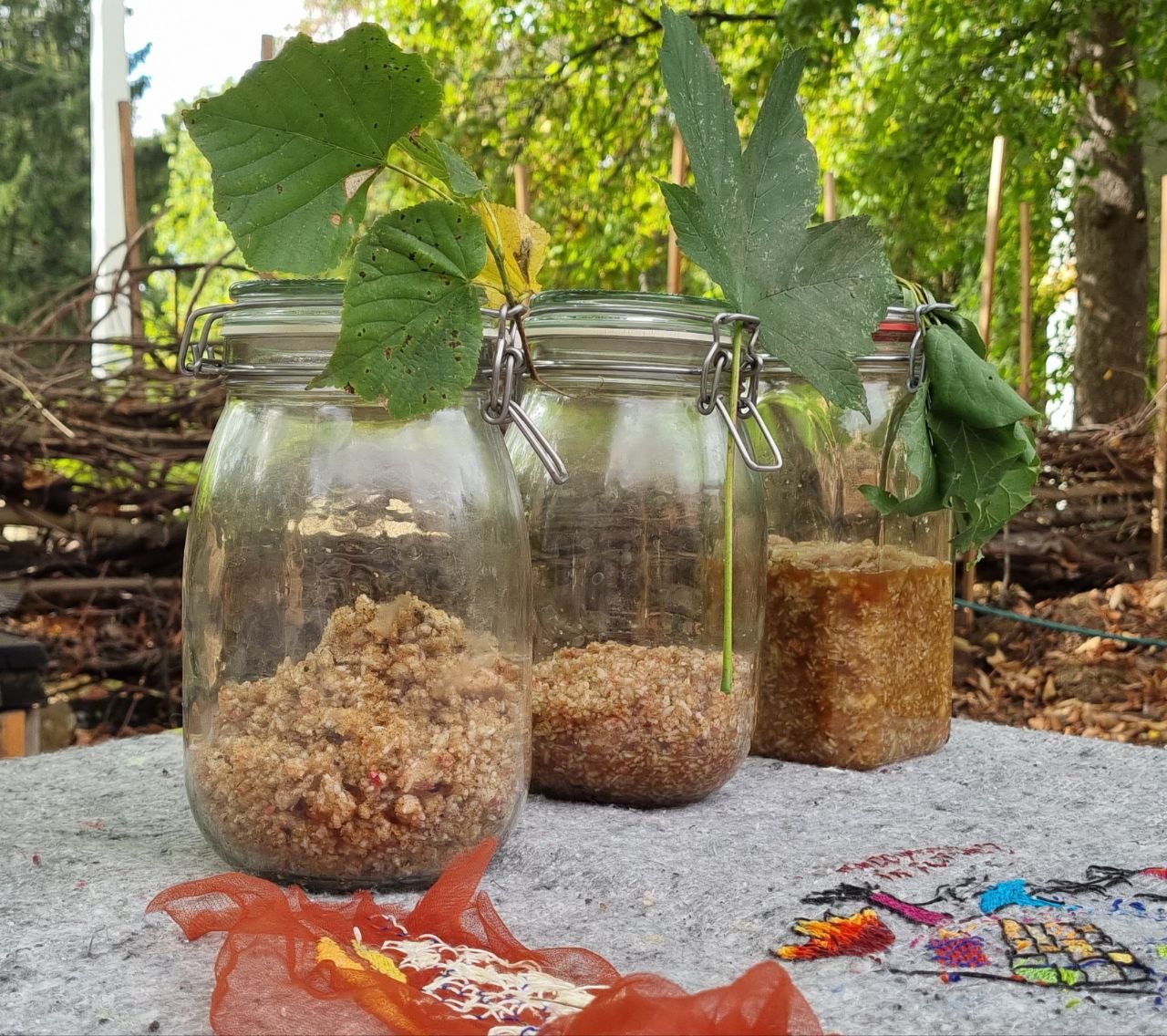
[Mark each jar with a leaf from its corresponding tree. Leave undisturbed for one week.]
14:00
End of phase 2. Preservation.
[wait at least 7 days]
CULTURING
[11 days later]
17:00
Checking in. A circle of chairs next to the mother tree.
What is present for you today?
What are you carrying?
One word. One ingredient.
17:05
Introduction to today’s process.
Preparing a habitat to grow and amplify a (micro)community from beneath the trees.
17:10
Grounding, sensing, listening, breathing.
Calling in what was and what we are taking in.
Calling in what is present now.
To the relations that regenerate as well as strangle.
17:20
Culturing. Preparation.
Introduction to the dry and wet ingredients for the mixture.
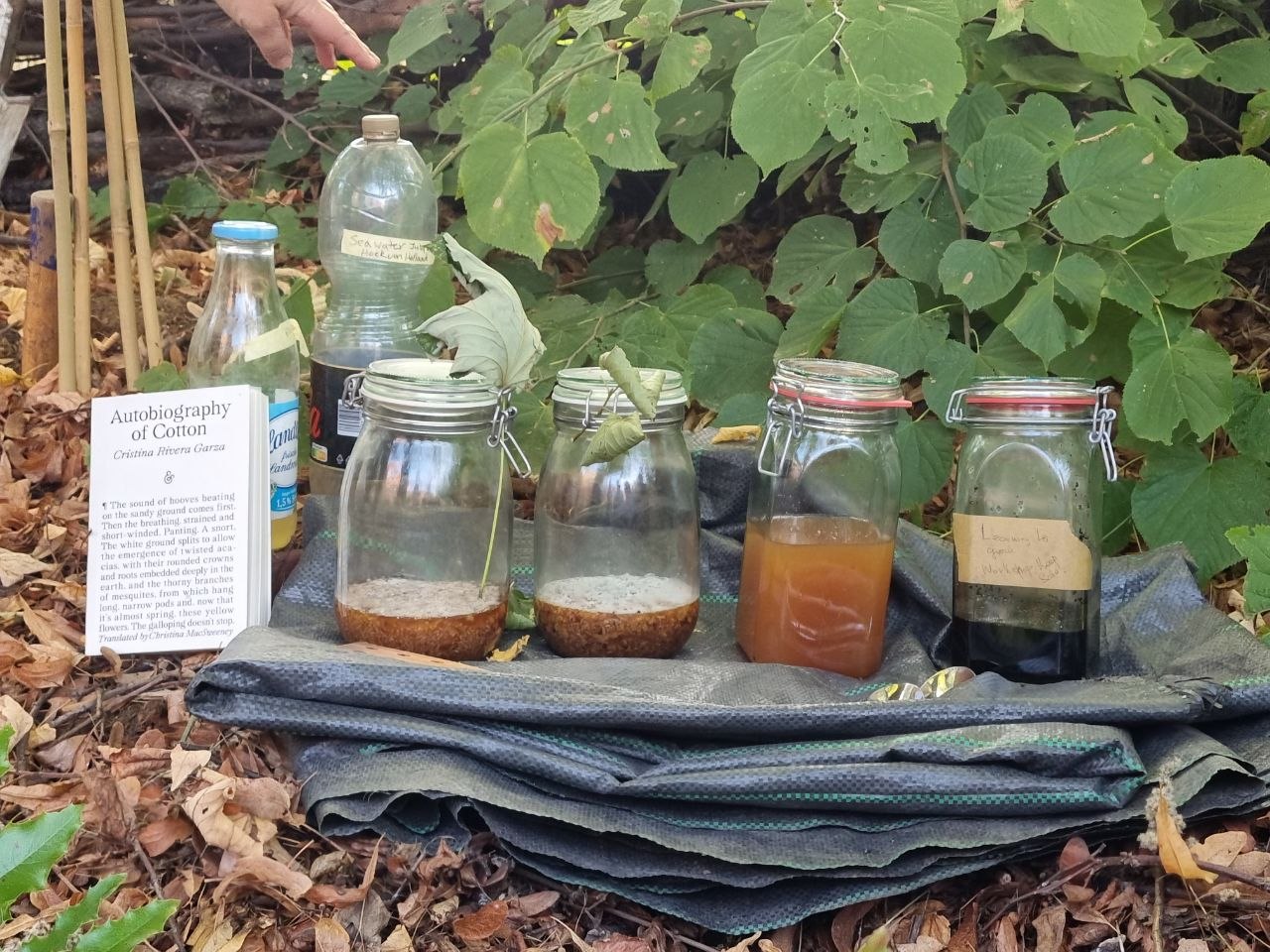
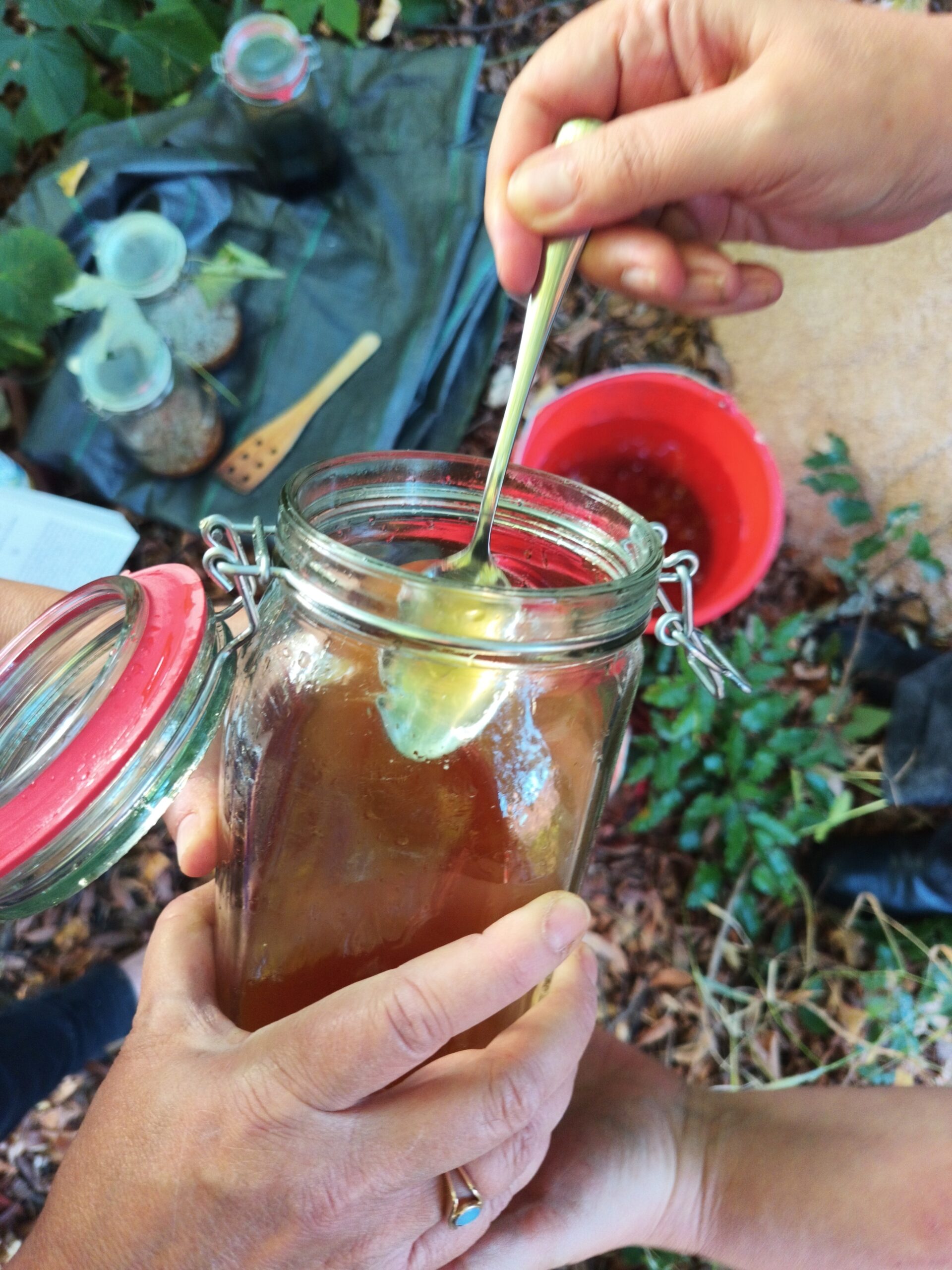
[Bran from a mill in The Netherlands, dried leaves from the linden tree in the Spore garden, indigenous microorganisms drenched in sugar (IMO2), nettle ferment (FPJ), garlic tincture (OHN), sea water from the Dutch seaside, brown rice vinegar.]
17:30
Mixing.
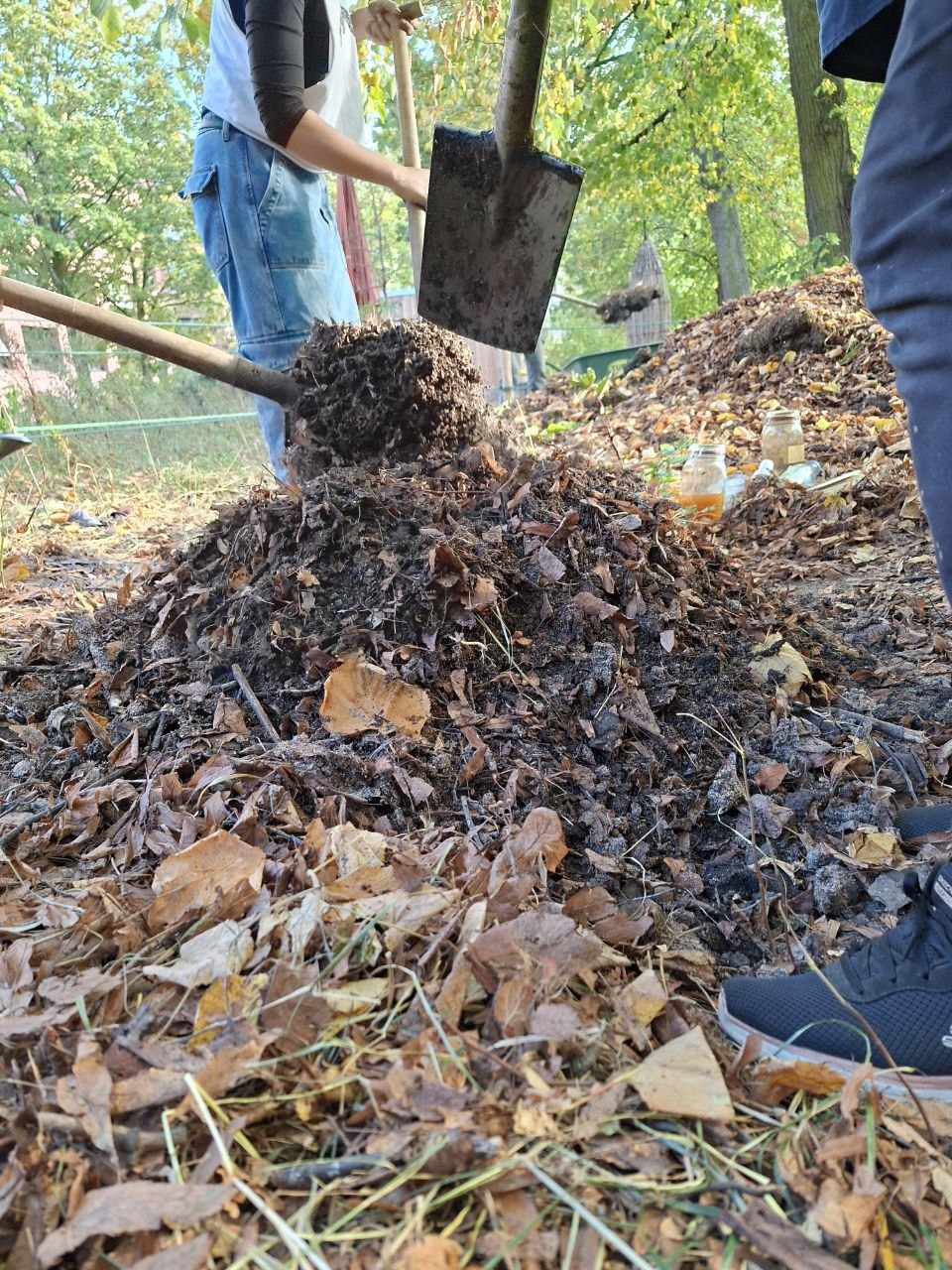
Measure out the dry ingredients: Eight buckets of bran. Four buckets of dried leaves to the pile.
Measure out the liquid ingredients: 20 L of rain water. 2 Tbsp of FPJ, 2 Tbsp of OHN, 2 Tbsp of brown rice vinegar, 650 ml of sea water, and a large spoonful of the IMO2.
Storytelling through ingredients.
What stories do the ingredients carry?
What does each one smell like?
Do you remember its taste?
Does it connect you to somewhere and sometime?
Our tears carry the memory of the sea.*
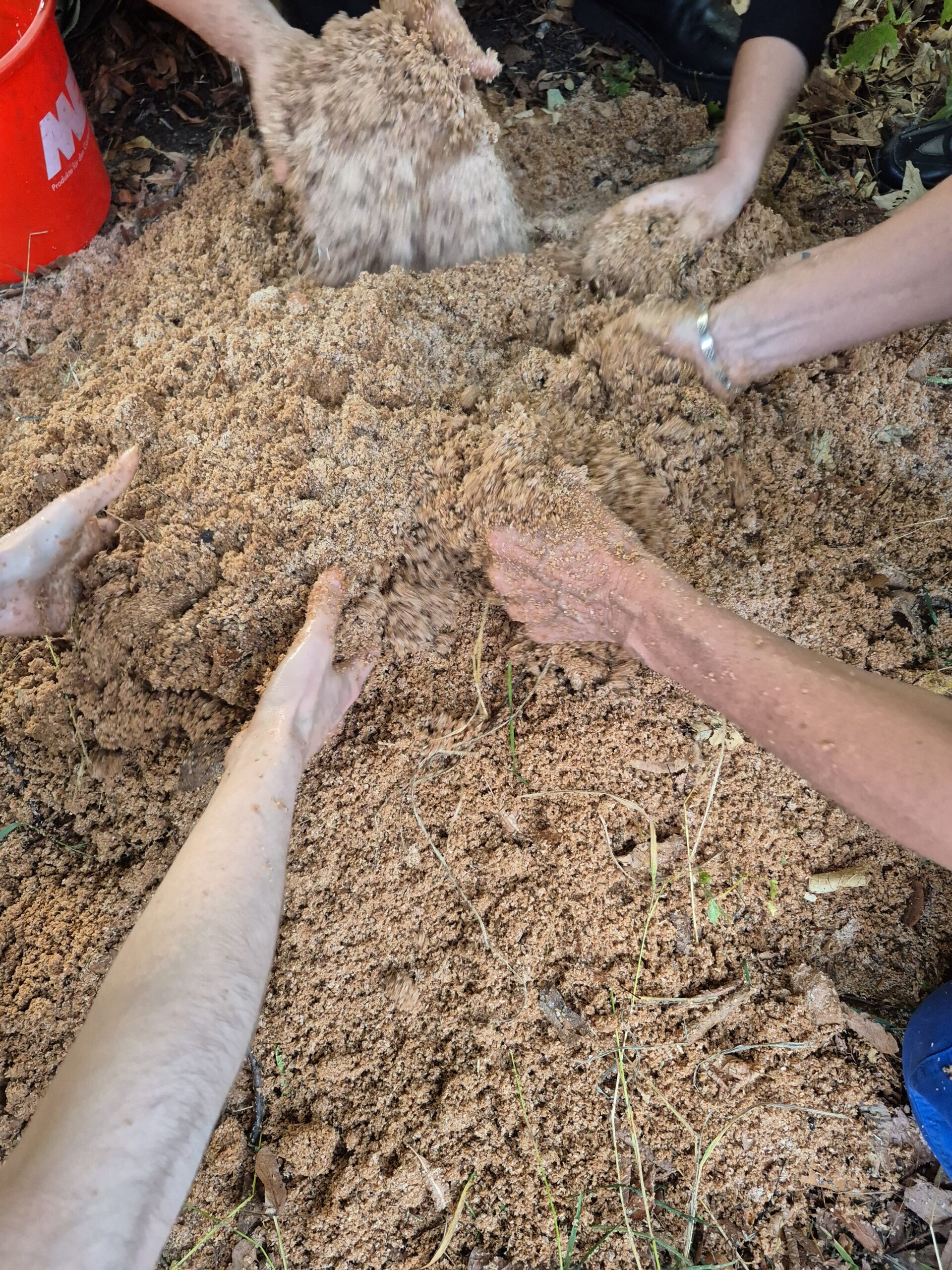
[Make a hole in the centre of the dry ingredients. Add the liquid to the centre.
Use many hands to mix together the liquid to the dry ingredients. Mix until the pile is fully wet (but not dripping) with the liquid.]
18:15
Sculpt the pile into a cake-like shape, to the height of a human hand.
Cover the pile with a thick layer of leaves.
Cover with a tarp to protect from the rain.
18:30
Reflections and reverberations.
Eat plum cake.
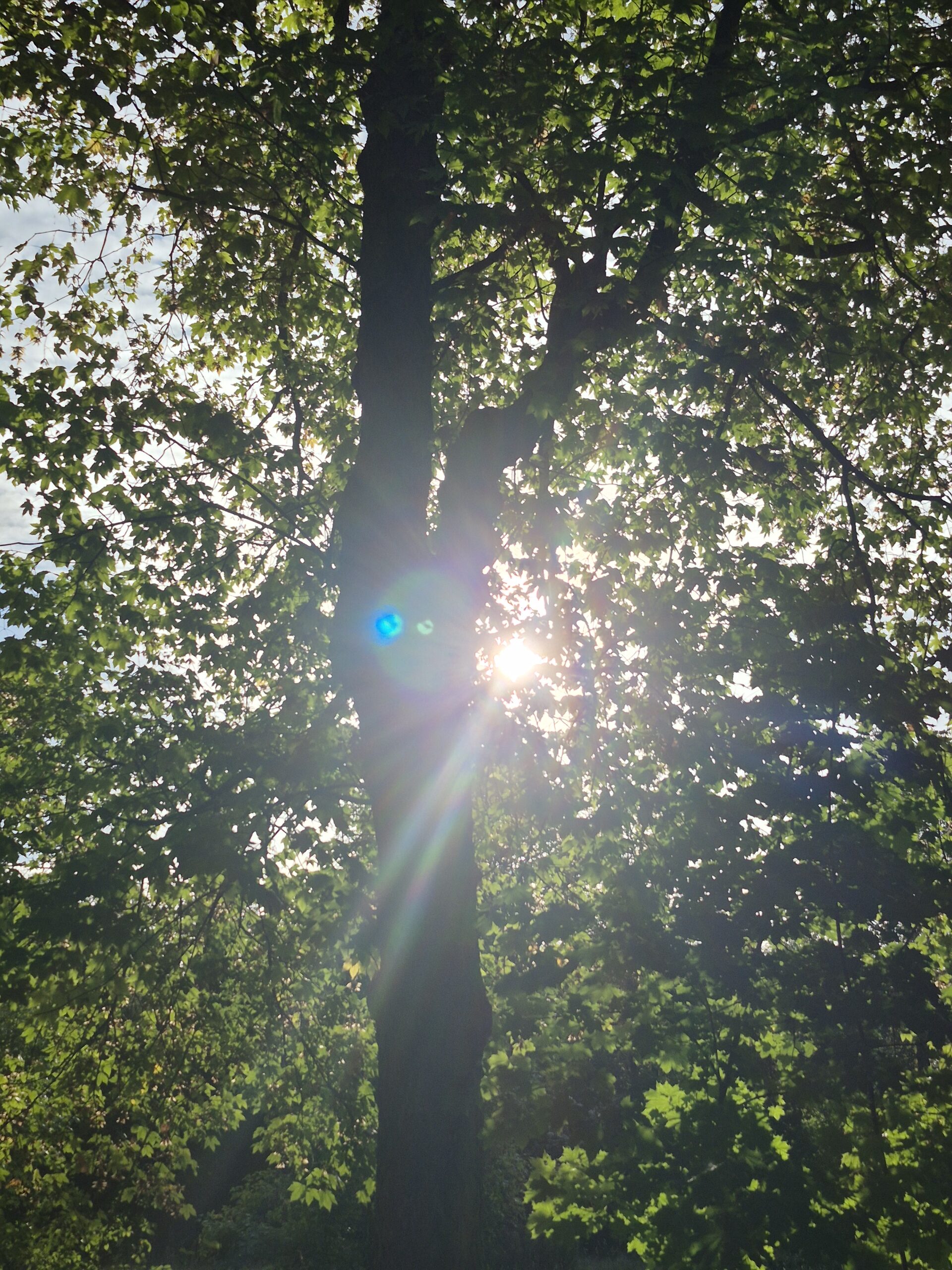
Witness the golden light through the trees.
Autumn sunset.
19:00
End of phase 3. Culturing.
[Wait 24 hours. Over the following week, tend to the pile collectively, monitoring its temperature and regulating its heat. Make sure it does not exceed 50°C. If the pile heats up too much, turn it to release heat and allow it to cool. After 3–4 days, let the pile rest. Thick cotton-like growth or dense spiderwebs of fungal mycelium will begin to coat the bran and leaves. Wait at least 3 more days before moving on to the next phase.]
MULTIPLICATION
[9 days later]
14:00
Checking in.
Where is your grief today? What are you carrying?
Place your hand on the part of your body where your grief resides.
Take a moment to listen and notice what is present in your body.
Checking in.
What is present in the (micro)community?
What is growing in the pile?
The smell of a forest bakery.
14:15
Grounding.
How do we collectively mourn while growing futures?
Breathing in, breathing out.
With each breath, sink deeper into the Land.
Connect with the Earth.
Listen for the grief of the Earth.
Let your own grief flow into the Earth,
and feel yourself being held and supported by it.
Notice any sensations that arise.
14:20
Guided intention.
What are your commitments and vows?
To belonging, to inhabiting the Earth?
Carry this intention into the next action.
14:25
Walk by the trees at the edge of the regenerative garden.
Gather eight buckets of forest soil.
14:50
Multiplication of the (micro)community.
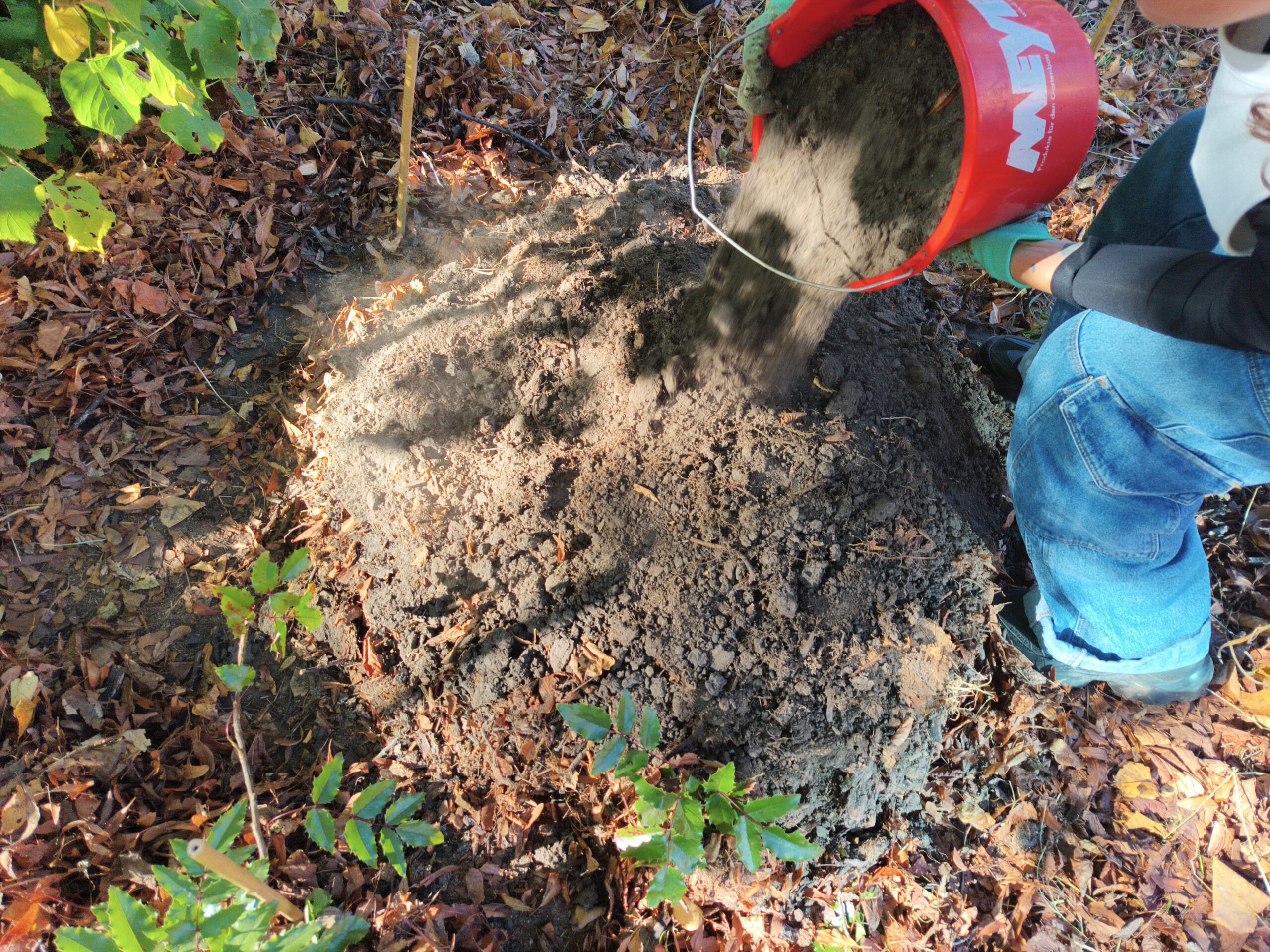
Place the forest soil on top of the cooled microbe pile.
Mix rain water, and similar ingredients as in phase 3 (culturing),
minus the IMO2.
Mix together the dry ingredients with the liquid ingredients.
Cover the pile with a thick bed of leaves.
13:30
Reflections and reverberations.
A reading on belonging as told by an autobiography of cotton.*
Food. Nourishment.
Eating fresh green tomato salsa prepared by yesterday’s harvest in the Spore garden.
14:30
End of phase 4. Multiplication.
[Wait at least 7 days or until when you see white, mycelium-like fungal threads or cotton-like growth spreading through the mixture. The pile will heat up and cool down. As with the previous step, make sure the temperature does not exceed 50°C.]
RELEASE
[10 days later]
14:00
Dear Ancestor.*
A speculative letter writing practice from the future.
Writing letters for the soil.
14:30
Release. Growing Futures.
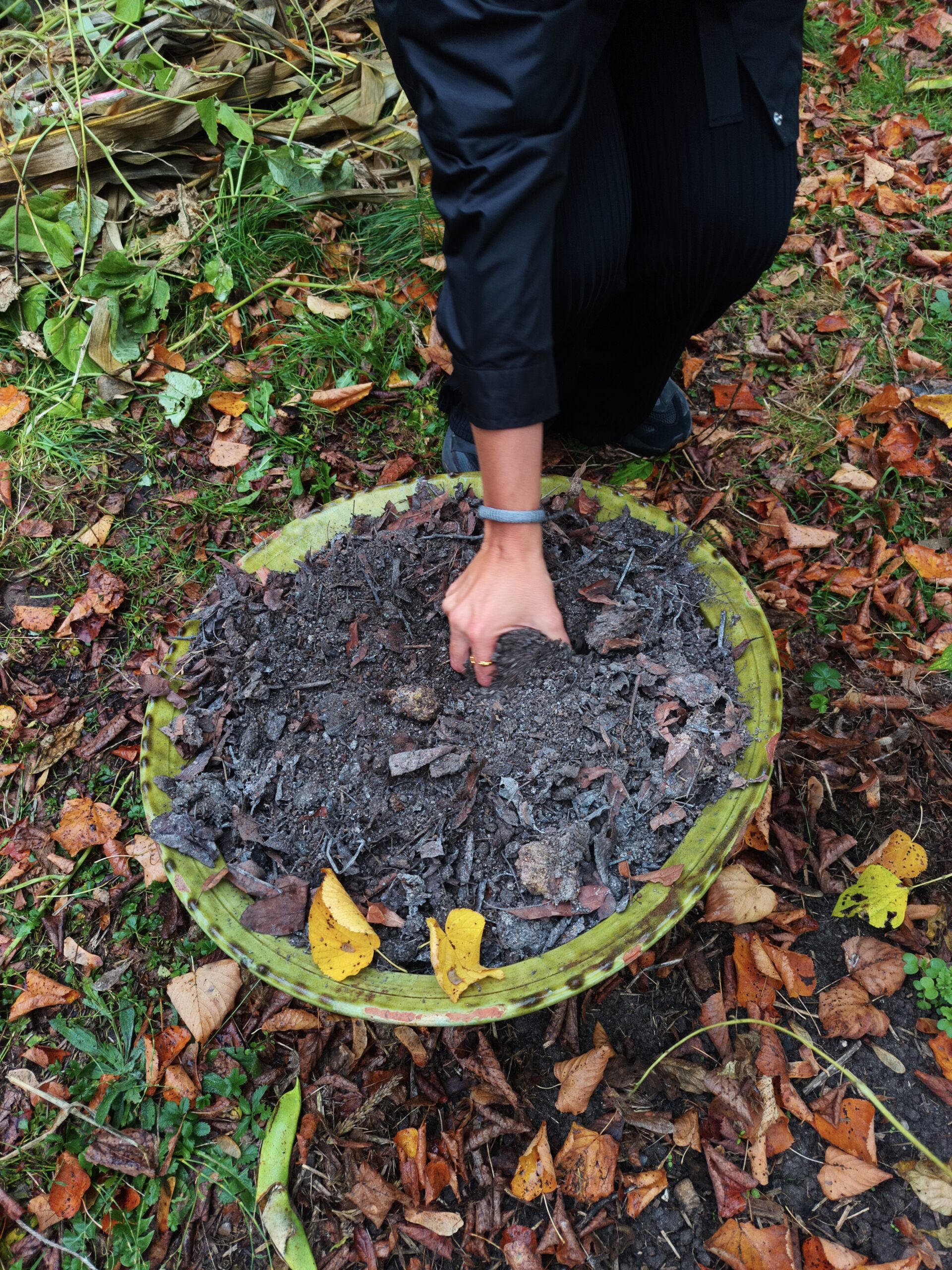
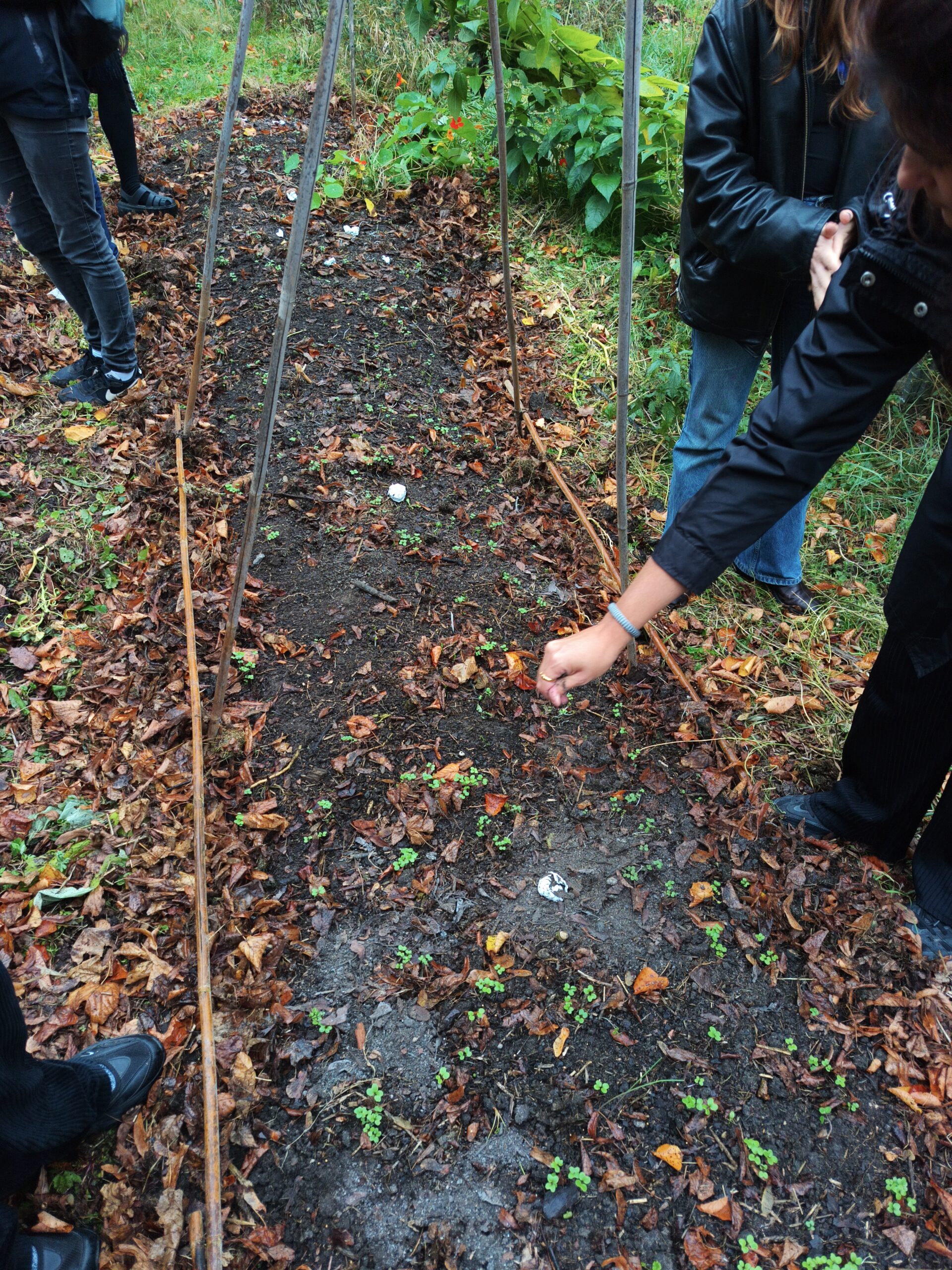
Take handfuls of the microbe-rich soil.
Sprinkle it over the garden beds.
Place the letters for the soil on the garden beds.
Cover the beds with a thick layer of leaves, cuttings,
and other leftover materials from this year’s harvest.
Let the garden and its beds rest until next spring.
END