How do we care for each other in our living, learning and working lives? The manual Promiscuous Infrastructures Practicing Care calls for an ethics of care and attentiveness to one another, re-imagines the making and the use of infrastructures, and situates care within a genealogy of artistic and social practice. Promiscuous Infrastructures brings together more than twenty contributors—art… Read more: Promiscuous Infrastructures Practicing Care
Authors: Carlo Ginzburg, Magnus Bärtås, Andrej Slávic, Michelle TeranEdition 1ISBN 9789170313998Language: EnglishWeight: 174 gramsPublication date: 7.11.2025Publisher: Stockholmia förlagNumber of pages: 123 In the fall of 2014, Carlo Ginzburg, then 76 years old, opened the door to his home in Bologna for a long conversation about history, methodology, and life. Over two intense days, he shared… Read more: The Devil’s Advocate: A Conversation with Carlo Ginzburg
Marc Allen Herbst and Michelle TeranPromiscuous Infrastructure: Practicing Care, pp.154-161Journal of Aesthetics & Protest Press/ Willem de Kooning Research Center2024 We feel the uncertainty of these times. We wonder about ways of learning that are centered upon uncertainty, that do not hide from challenges we face. Institutions of higher learning have promised never-ending progress based on reason… Read more: Learning and Dreaming through Social Uncertainty
The first international symposium of the Institute of Contemporary Art, Design and Architecture of the Art Academy of Latvia (LMDA) (BUILDING) NEW PERSPECTIVES through Practice-based Research in Art, Design and Architecture took place in November 2022, demonstrating the diversity of contemporary research approaches in the humanities and creative disciplines. The new publication, launched at the… Read more: (Building) New Perspectices through Practice-led Research in Art, Design and Architecture
• Artistic Research Practice • Check-ins • ethics of care Utterances: Composing a Care-informed Research Practice in the Cracks is a humble offering towards an alternative artistic research practice that is guided by an ethics of care. This intimate publication is the collective authorship of the Promiscuous Care Study Group. Co-publishers HumdrumPress, Meteoro Editions and… Read more: Utterances Composing a Care-Informed Research Practice in the Cracks
From a University to the Pluriversity of the ArtsVan een University of the arts naar een Pluriversity of the Arts What does the art school of the future look like? How does it smell, sound and taste? Which values are central to it and how do they take shape? What if you could dream freely?… Read more: Interview with Michelle Teran
2021-2022
Collectively-authored text
Research program Social Practices and Research Center Willem de Kooning Academy
Written together with 24 past and present teachers, researchers and program heads of the Social Practices program at the Willem de Kooning (art and design) academy in Rotterdam, this long-form essay presents a statement representative of collective discussions on a particular subject/area. It aims to encapsulate the goals, aspirations, and (present and future) positioning of the curricula and research agenda within the Social Practices study program.
https://didae.eu/ DIGITAL DIDACTICS IN ART EDUCATION (DIDAE) is an OER (Open Educational Resources) platform that provides an overview of easily accessible digital TOOLS for art-making, art education, and design education. Additionally, the DIDAE platform offers specially developed IDEAS for your teaching practice and classrooms using these TOOLS. This website brings together the results of the… Read more: Digital Didactics in Art Education
A 24-hour event that proposes ways of learning through uncertainty and holding space collectively in uncertain times. Hosted by the Zurich University of the Arts and developed by Michelle Teran (Research Centre WdKA|Lectoraat Social Practices) and Marc Herbst (Journal for Aesthetics & Protest). Download workshop score here: This pedagogical experiment considers distinct temporalities and orientations… Read more: Learning and Dreaming Together through Social Uncertainty
A workshop on generative conflict and difference. This workshop was a semi-closed event, and embedded within the 2021 version of the Climate Care festival, curated by Soft Agency for the Floating University in Berlin. Participants invited to spend the night in the basin at the Floating University campus were members of the floating e.V and invited guests.
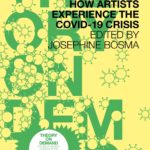
Theory on Demand #41 Pandemic Exchange: How Artists Experience the COVID-19 Crisis Edited by Josephine Bosma
News reports on the Covid-19 pandemic seldom include how the virus and the societal lockdowns affect artists. A lively circuit of cultural events, meetings, and exhibitions has come to an almost complete stop, leaving artists often not just with a significant drop in income but also bereft of their vital and supporting social communities. Art writer and curator Josephine Bosma, feeling quite cut off herself after a year of lockdowns and too much screen time, saw both desperate and relieved outcries from artists popping up through the glossy algorithmic veneer on social media. She decided to reach out to some of the more outspoken voices. From this an interview project was born, which grew into this collection of heartfelt stories and brief reports from artists trying to survive the pandemic and sometimes finding unexpected ways to do so.
Authors: Annie Abrahams, Lucas Bambozzi, Dennis de Bel, !Mediengruppe Bitnik, S()fia Braga, Arcangelo Constantini, Tiny Domingos, John Duncan, Nancy Mauro Flude, Ben Grosser, Adham Hafez, Sachiko Hayashi, Lynn Hershman Leeson, Garnet Hertz, Jennifer Kanary, Brian Mackern, Miltos Manetas, Lorna Mills, Daniela de Paulis, Tina La Porta, Archana Prasad, Melinda Rackham, Michelle Teran, Mare Tralla, Igor Vamos, Ivar Veermäe.
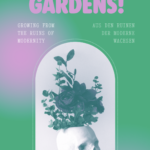
Everything Gardens! Growing from the Ruins of Modernity, edited by Marc Herbst and Michelle Teran, outlines a pedagogical model that is intended to remain useful throughout Berlin’s next 99 years, through the ravages of climate change and social upheaval. This model is centred in Berlin’s Prinzessinnengarten at Moritzplatz and developed under the moniker of Nachbarschaftsakademie (The Neighborhood Academy). The Nachbarschaftsakademie (NAK) was created in 2015 as a self-organized platform for collective learning, bringing together critical artistic practices and urban and rural activism. The NAK is an educational project bound up with an ecosystem of other projects that share similar goals in Berlin’s Prinzessinnengarten – guiding an eco-social practice over time.
Informed by the concept of “staying with the trouble,” it names key issues, while seeking an ethno-poetic approach that energizes, orients and sustains the project for the duration. The book serves to document the conflicts that inform the garden project today. At the same time, while cataloging the 2019 summer course offerings.
PAGES: 144 EDITORS: Marc Herbst and Michelle Teran ISBN: 978-3-943253-33-7 DESIGNER: Luca Bogoni PUBLISHER: adocs Verlag
Everything Gardens! Growing from the Ruins of Modernity is part of the three book boxed set Licht Luft Scheisse. Perspectives on Ecology and Modernity. Volume 1 documents the exhibition Archaeologies of Sustainability at the neue Gesellschaft für bildende Kunst (nGbK); Volume 2 is dedicated to the teaching and event program Growing from the Ruins of Modernity at the Nachbarschaftsakademie im Prinzessinnengarten Kreuzberg; and Volume 3 looks back on the exhibition Über Nature at the Botanical Museum Berlin.
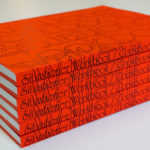
Situationer Workbook/Cookbook, edited by Michelle Teran with Johanna Monk, Teana Boston-Mammah, and Clementine Edwards, is a book in two volumes on transformative pedagogy and teaching in times of crisis. How can times of crisis – or of crises, in their many forms – inform and influence the pedagogies needed to situate ourselves in a troubled world? How can one tune in to the conditions, concerns and difficulties of these complex times, by cultivating new and necessary forms of humility, attentiveness and recognition toward other knowledges, other value systems, other frameworks of understanding? The essays, interviews, and other creative and critical interventions in this book offer a wide variety of reflections upon these fundamental questions.
This publication connects to emergent research around transformative pedagogy in socially engaged art and art education. It comes from the impetus to go back to the drawing board, in order to imagine other possible perspectives on learning and education. It is a body of research that continually writes and enacts itself into existence, cultivated by engaged practitioners within the Willem de Kooning Academy and Piet Zwart Institute in Rotterdam and beyond.
PAGES: 246
DIMENSIONS:7.48″ × 10.24″ × 0.67″
ISBN: 9789492308283
IMPRINT: Publication Studio Rotterdam
DESIGNER: HARDWORKING GOODLOOKING
PUBLISHER: Research Centre WdKA and Publication Studio
Florian Cramer and Michelle TeranIn D. P. Gijsbertse, H. A. Van Klink, C. Machielse, & J. H. Timmermans(Eds.), Hoger beroepsonderwijs in 2030: Toekomstverkenningen en scenario’s vanuitHogeschool Rotterdam, 2020. Rotterdam: Hogeschool Rotterdam Uitgeverij. Abstract: Our letters pay homage to the 1890 novel News from Nowhere by William Morris, a major figure in the 19th century British Arts and… Read more: Letters from dystopian and utopian futures of arts education
VIS Nordic Journal for Artistic Research is a new digital journal about Artistic Research in the Nordic region. The journal is the result of a cooperation between Stockholm University of the Arts and Norwegian Artistic Research Programme. The purpose of the journal is to serve as a basic source of knowledge for anyone who wants to learn and immerse themselves in artistic research in the Nordic region.
The essay PERCEPTION CRISIS MACHINE CONGLOMERATE: A FAST ENTRY INTO THE METHODOLOGY OF SYNSMASKINEN by Michelle Teran & Frans Jacobi included in the reader for the 9th SAR International Conference on Artistic Research
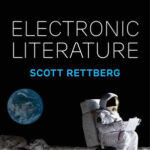
Transmedia Literature works Folgen and Buscando Sr. Goodbar included in the publication Electronic Literature.
In this book, Rettberg places the most significant genres of electronic literature in historical, technological, and cultural contexts. These include combinatory poetics, hypertext fiction, interactive fiction (and other game-based digital literary work), kinetic and interactive poetry, and networked writing based on our collective experience of the Internet. He argues that electronic literature demands to be read both through the lens of experimental literary practices dating back to the early twentieth century and through the specificities of the technology and software used to produce the work.
Considering electronic literature as a subject in totality, this book provides a vital introduction to a dynamic field that both reacts to avant-garde literary and art traditions and generates new forms of narrative and poetic work particular to the twenty-first century. It is essential reading for students and researchers in disciplines including literary studies, media and communications, art, and creative writing.
Editors: Peter Aronsson, Andrej Slávik, Birgitta Svensson (eds)ISBN: 978-91-88763-07-5ISSN: 0348-1433Pages: 280Publishing date: 2020Serie: KVHAA Konferenser 99 The outcome of an international symposium taking place on 27–28 April 2017 at the Royal Swedish Academy of Letters, History and Antiquities in Stockholm, this anthology can be read from either end. At one end, a number of essays… Read more: Images in History: Towards an (audio)visual historiography
Contributions from: Clara Balaguer, Florian Cramer, Rolf Engelen, Deanna Herst, Aldje van Meer, Vanessa Jane Phaff, Michelle Teran, and Sjoerd Westbroek. When the Willem de Kooning Academy and Codarts University of the Arts hosted the 15th ELIA Biennial Conference: Resilience and the City: Art, Education, Urbanism in 2018, it was an ideal opportunity to share research and knowledge with over 460… Read more: WdKA Research: A Selection of Contributions to the 15th Elia Biennial Conference 2018
“Future Guides: From Information to Home” is an artistic research project on following: how to practice and theorize following. It was carried out between 2010-2014 within the Norwegian Artistic Fellowship Programme and around the Bergen Academy of Art and Design. A final exhibition of my artistic research, “Your Revolution Begins at Home“, took place at the USF Gallery and Cinemateket in Bergen, September 4-14, 2014. “Confessions of an Online Stalker“, a critical reflection text on artistic results of the research, was submitted in 2015.
The study outlines the emergence of an artistic research method combining data mining, systems for mapping, storytelling, and translation and its application in the fields of media art, microhistory, and activism. The development of artistic works (several books, text, film, installation and public performance) become the aesthetic results of conversations, negotiations and reflections around the proceeding questions: How are tracking, guiding, following and stalking used as artistic research methods? What role does image production play in everyday life and how does it create tension between the public and private experience? How can strategies of translation provide the critical tools for experimenting with shifts between context, subjectivity and scale?
This artistic research reflects on a contemporary condition in which personal and social archives constitute a new type of city guide that challenges the official representations of cities online. It reflects on the phenomenon of documenting and sharing one’s urban life to the world online, an act reflective of a culture of making oneself and one’s life visible thus, present in online social networks. The work focuses on the micro or working on case studies, whereby the studying and following of trails of data produced by different individuals and seeing where it leads is a process of trying to establish where one “is” from other people’s data. However, the effort of pinning down a location is not merely to focus in a machinic system of (geo)precision on the place where one might be standing but to recognize the people who occupy (or have occupied) that place in the city. It is a method of online tracking which leads to spatial tracking, from which a narrative language emerges. The question is implicitly addressed: to what extent urban media art can help us to locate ourselves in the mediated city by offering to trace and reveal the connections between places, people, and digital culture. But what if the connections reveal a city in crisis? The research leads to a flight to Madrid and ends up in the homes of evicted families, where anti-eviction activists use digital information to locate and make public the everyday effects of crisis. In the foreground of the crisis is the crisis of the home. It is there that we encounter sites of political struggle, the act of making oneself and one’s life visible becoming a strategy for collective empowerment.
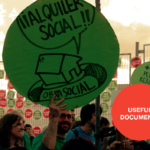
The Obra Social Manual, a 25-page manual of civil disobedience on the tactics of recuperating houses- a direct action how-to. The manual describes the tactics of the Obra Social campaign launched by the PAH in 2012. It offers a step-by-step guide for reinstating the social use of empty housing owned by banks, by putting them in the hands of evicted individuals and families. The Obra Social manual is a model for alternate approaches to living in times of crisis. It provides a step-by-step guide to recuperation: how to find buildings, which buildings to target, the relation between real-estate speculation and eviction, how to enter a building, and how stay once you are inside.
The Obra Social (Social Work) Manual is a translation project initiated by artist Michelle Teran and published by The Journal of Aesthetics& Protest. The English translation accompanies Dignity / Dignidad, a feature-length film about an Obra Social building in Mosteles, Madrid, and the Reclaiming Workshop, both developed in 2016.
Urban media art is possibly one of the most momentous expansions within the field of contemporary public art. Referring to various forms of media-aesthetic, artistic engagement in urban environments and evolving from a mix of genealogies of media art, avant-garde, architecture, urban development, design and technology, and biology, urban media art creates a space in which artists make, utilize and critically explore innovations in software and technology to create artworks, installations and situations in response to the urban discourses and urgencies of our time.
Microhistories studies the form of the video essay, which can be said to treat its subject matter in a critical and investigative way while at the same time reflecting its processes and its considerations. It shares this preoccupation with the small, marginalized stories with an approach within the field of history, so-called microhistory. Here one studies habits and routines rather than deliberate actions, underlying mentalities rather than explicit views. In microhistory the exception is more interesting than the rule, including the everyday, the overlooked details – all this that can prove to be as important as the “grand” recognized history. This publication brings together the results of a three year artistic research project which brought together prominent practices and theoreticians within three fields – art, artistic research and microhistory – in order to build shared knowledge.
Editors: Magnus Bärtås, Andrej Slavik Published by: Konstfack University College of Arts, Crafts and Design, Stockholm Contributors: Axel Andersson, Magnus Bärtås, Carlo Ginzburg, Mika Hannula, Behzad Khosravi Noori, Oscar Mangione, Suzana Milevska, Lina Selander, Lena Séraphin, Andrej Slavik, Lars-Henrik Ståhl, Michelle Teran
304 pages, softcover, color Konstfack Collection, 2016
Rupture Sessions is a staging of a public reading of a conversation between a psychologist and four women living in Madrid about their personal experiences with eviction. The conversation took place as part of a research of the psychosocial impacts of eviction carried out by PAH Madrid. The PAH is a right-to-housing movement operating throughout Spain, established in 2009 to fill a gap insufficient measures within the government for dealing with the massive housing crisis and wave of evictions brought on by the global financial crisis.
Translated from the original recordings in Spanish into other languages (to date English and French), the transcript is a testimony to the everyday realities of contemporary crisis, bringing personal experiences into universal issues around social rupture and the disintegration of the home. The public reading of the text is a discussion and analysis of the conversation through aesthetic reflection. The circulation and introduction of the translated text into other configurations and conversations give impetus for reflection on issues, around contemporary crisis and its impacts on the home, a cross-pollination of ideas which takes place within a dialogical situation.
Folgen Archive is a limited edition artist book that documents a series of journeys in which the artist Michelle Teran uses the traces video makers had left in the public sphere of the internet to follow people throughout the city of Berlin.
September, 2014, English 18 x 25 cm, 264 pages, color hardcover with dust jacket
September, 2014, English
18 x 25 cm, 264 pages, color
hardcover with dust jacket
The conception and the structure of this publication is highlighting a possible understanding of artistic research from the perspective of using key concepts and the intervention methods of critical theory (in the way it is understood in the history and theory of contemporary art, instead of the way it is understood in philosophy) as well as from the perspective of the product of artistic research, as a work of art produced by former or current PhD candidates involved in artistic research doctoral programmes.
Contributors: Catalin Gheorghe, Henk Slager, Andrea Phillips, Mick Wilson, Michael Baers, Michelle Teran, Flis Holland, Rachel Mader, Jesper Alvær
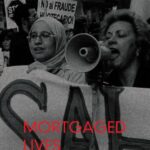
Written by two of the founders of the PAH, Mortgaged Lives explains the causes of and points towards those responsible for the Spanish mortgage crisis and the broader situation. Ada Colau and Adrià Alemany analyze the role of the public administration, reveal the fights carried out by the PAH through first-person accounts and offer advice and useful resources for defending the right to housing and avoiding abuses of power by banks and financial institutions.
Mortgaged Lives Vidas Hipotecadas
By Ada Colau and Adrià Alemany Prologues by Gerard Pisarello and José Coy
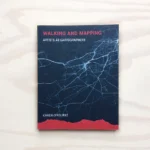
An exploration of walking and mapping as both form and content in art projects using old and new technologies, shoe leather and GPS. From Guy Debord in the early 1950s to Richard Long, Janet Cardiff, and Esther Polak more recently, contemporary artists have returned again and again to the walking motif. Today, the convergence of global networks, online databases, and new tools for mobile mapping coincides with a resurgence of interest in walking as an art form. In Walking and Mapping, Karen O’Rourke explores a series of walking/mapping projects by contemporary artists. She offers close readings of these projects-many of which she was able to experience firsthand-and situates them in relation to landmark works from the past half-century. Together, they form a new entity, a dynamic whole greater than the sum of its parts.
Folgen, a 45-minute lecture performance, draws on the existing narratives of video makers found on YouTube to build a multi-layered media landscape of Berlin. My subjective approach, which weaves together mapping, literature and live performance, combines fragments of images and sound from YouTube videos with my own narration, using the traces video makers have left in the public sphere of the internet to follow people throughout the city. The performance is a deliberate mixing between reality and fiction, an interweaving narrative about desire.
 How do we care for each other in our living, learning and working lives? The manual Promiscuous Infrastructures Practicing Care calls for an ethics of care and attentiveness to one another, re-imagines the making and the use of infrastructures, and situates care within a genealogy of artistic and social practice. Promiscuous Infrastructures brings together more than twenty contributors—art… Read more: Promiscuous Infrastructures Practicing Care
 Authors: Carlo Ginzburg, Magnus Bärtås, Andrej Slávic, Michelle TeranEdition 1ISBN 9789170313998Language: EnglishWeight: 174 gramsPublication date: 7.11.2025Publisher: Stockholmia förlagNumber of pages: 123 In the fall of 2014, Carlo Ginzburg, then 76 years old, opened the door to his home in Bologna for a long conversation about history, methodology, and life. Over two intense days, he shared… Read more: The Devil’s Advocate: A Conversation with Carlo Ginzburg
 Marc Allen Herbst and Michelle TeranPromiscuous Infrastructure: Practicing Care, pp.154-161Journal of Aesthetics & Protest Press/ Willem de Kooning Research Center2024 We feel the uncertainty of these times. We wonder about ways of learning that are centered upon uncertainty, that do not hide from challenges we face. Institutions of higher learning have promised never-ending progress based on reason… Read more: Learning and Dreaming through Social Uncertainty
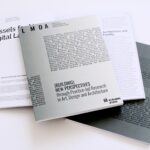 The first international symposium of the Institute of Contemporary Art, Design and Architecture of the Art Academy of Latvia (LMDA) (BUILDING) NEW PERSPECTIVES through Practice-based Research in Art, Design and Architecture took place in November 2022, demonstrating the diversity of contemporary research approaches in the humanities and creative disciplines. The new publication, launched at the… Read more: (Building) New Perspectices through Practice-led Research in Art, Design and Architecture
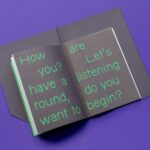 • Artistic Research Practice • Check-ins • ethics of care Utterances: Composing a Care-informed Research Practice in the Cracks is a humble offering towards an alternative artistic research practice that is guided by an ethics of care. This intimate publication is the collective authorship of the Promiscuous Care Study Group. Co-publishers HumdrumPress, Meteoro Editions and… Read more: Utterances Composing a Care-Informed Research Practice in the Cracks
 From a University to the Pluriversity of the ArtsVan een University of the arts naar een Pluriversity of the Arts What does the art school of the future look like? How does it smell, sound and taste? Which values are central to it and how do they take shape? What if you could dream freely?… Read more: Interview with Michelle Teran
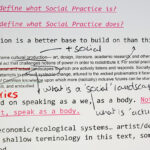 2021-2022 Collectively-authored text Research program Social Practices and Research Center Willem de Kooning Academy Written together with 24 past and present teachers, researchers and program heads of the Social Practices program at the Willem de Kooning (art and design) academy in Rotterdam, this long-form essay presents a statement representative of collective discussions on a particular subject/area. It aims to encapsulate the goals, aspirations, and (present and future) positioning of the curricula and research agenda within the Social Practices study program.
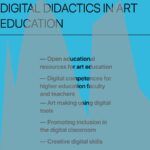 https://didae.eu/ DIGITAL DIDACTICS IN ART EDUCATION (DIDAE) is an OER (Open Educational Resources) platform that provides an overview of easily accessible digital TOOLS for art-making, art education, and design education. Additionally, the DIDAE platform offers specially developed IDEAS for your teaching practice and classrooms using these TOOLS. This website brings together the results of the… Read more: Digital Didactics in Art Education
 A 24-hour event that proposes ways of learning through uncertainty and holding space collectively in uncertain times. Hosted by the Zurich University of the Arts and developed by Michelle Teran (Research Centre WdKA|Lectoraat Social Practices) and Marc Herbst (Journal for Aesthetics & Protest). Download workshop score here: This pedagogical experiment considers distinct temporalities and orientations… Read more: Learning and Dreaming Together through Social Uncertainty




 Florian Cramer and Michelle TeranIn D. P. Gijsbertse, H. A. Van Klink, C. Machielse, & J. H. Timmermans(Eds.), Hoger beroepsonderwijs in 2030: Toekomstverkenningen en scenario’s vanuitHogeschool Rotterdam, 2020. Rotterdam: Hogeschool Rotterdam Uitgeverij. Abstract: Our letters pay homage to the 1890 novel News from Nowhere by William Morris, a major figure in the 19th century British Arts and… Read more: Letters from dystopian and utopian futures of arts education



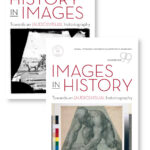 Editors: Peter Aronsson, Andrej Slávik, Birgitta Svensson (eds)ISBN: 978-91-88763-07-5ISSN: 0348-1433Pages: 280Publishing date: 2020Serie: KVHAA Konferenser 99 The outcome of an international symposium taking place on 27–28 April 2017 at the Royal Swedish Academy of Letters, History and Antiquities in Stockholm, this anthology can be read from either end. At one end, a number of essays… Read more: Images in History: Towards an (audio)visual historiography
 Contributions from: Clara Balaguer, Florian Cramer, Rolf Engelen, Deanna Herst, Aldje van Meer, Vanessa Jane Phaff, Michelle Teran, and Sjoerd Westbroek. When the Willem de Kooning Academy and Codarts University of the Arts hosted the 15th ELIA Biennial Conference: Resilience and the City: Art, Education, Urbanism in 2018, it was an ideal opportunity to share research and knowledge with over 460… Read more: WdKA Research: A Selection of Contributions to the 15th Elia Biennial Conference 2018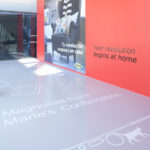




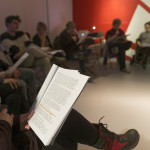

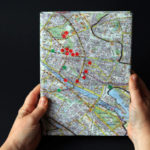





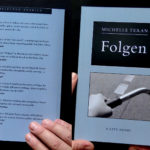 Folgen, a 45-minute lecture performance, draws on the existing narratives of video makers found on YouTube to build a multi-layered media landscape of Berlin. My subjective approach, which weaves together mapping, literature and live performance, combines fragments of images and sound from YouTube videos with my own narration, using the traces video makers have left in the public sphere of the internet to follow people throughout the city. The performance is a deliberate mixing between reality and fiction, an interweaving narrative about desire.